
Insight
The Future of Immersive Experiences: Career Opportunities in Extended Reality
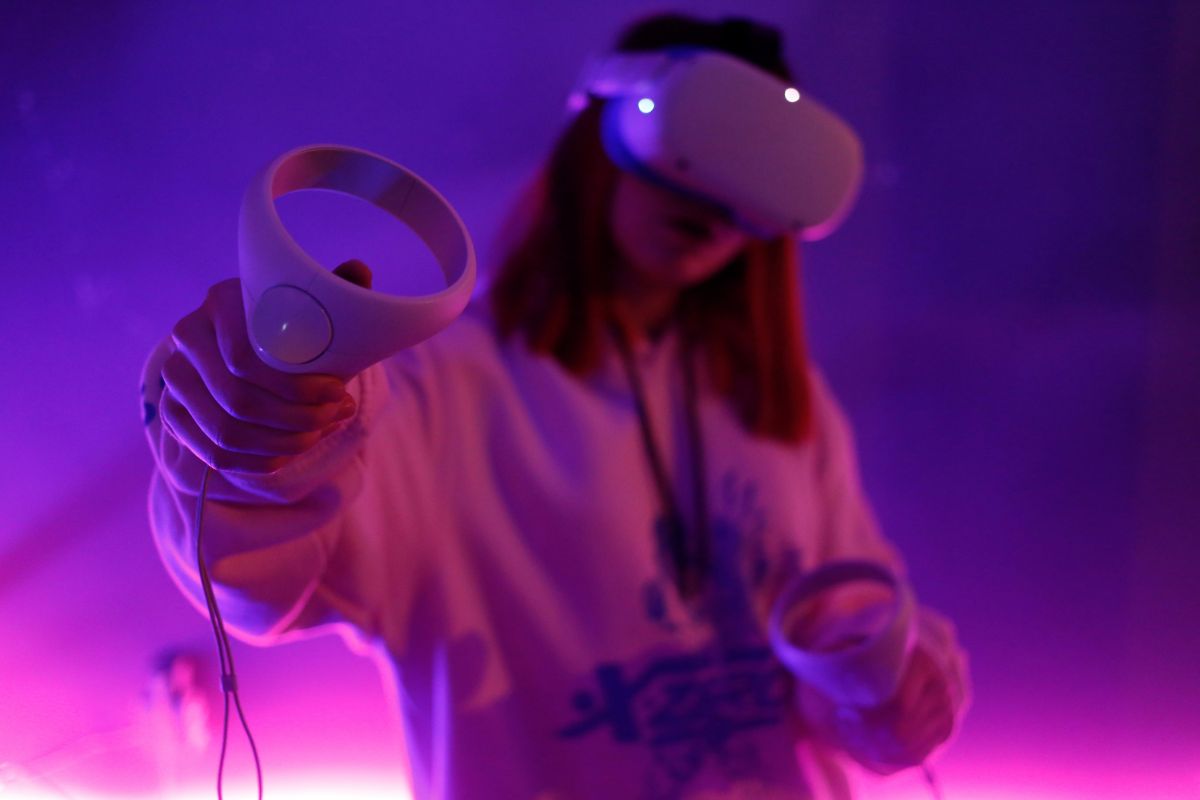
As with so many sectors, the future of immersive experiences is being shaped by those with technical skills in creative computing and Artificial Intelligence (AI) – which is where SAE’s BA/BSc Creative Computing and AI course plays a vital role in shaping the next generation of tech professionals.
AI, virtual reality (VR), augmented reality (AR), and mixed reality (MR) are immersive technologies that make up Extended Reality (XR).
They may have first grabbed attention within video game development but are now shaping a wide variety of sectors too – healthcare, manufacturing, education, and retail.
According to the World Economic Forum, skills in AI and big data are expected to see the fastest growth by 2030. A knowledge of programming languages and how to develop digital experiences is therefore in great demand alongside an aptitude for problem solving and innovation.
Our blog explores this evolving need for tech professionals, the opportunities the sector creates and the skills that need to be honed to navigate these emerging technologies.
Interested in joining our course this September? Contact our team now for more details!
What is XR technology
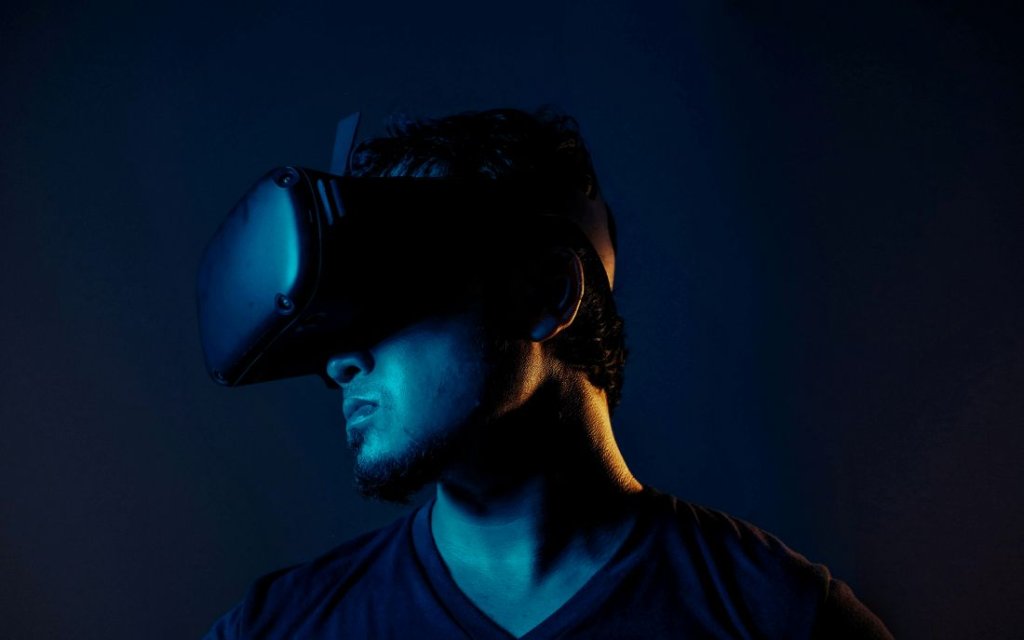
Extended Reality (XR) is a catch-all term for immersive technologies that merge the physical and virtual worlds.
There are various examples of this mode of creativity that have opened up new possibilities for both tech talent and consumers looking for more interactive experiences in both work and entertainment.
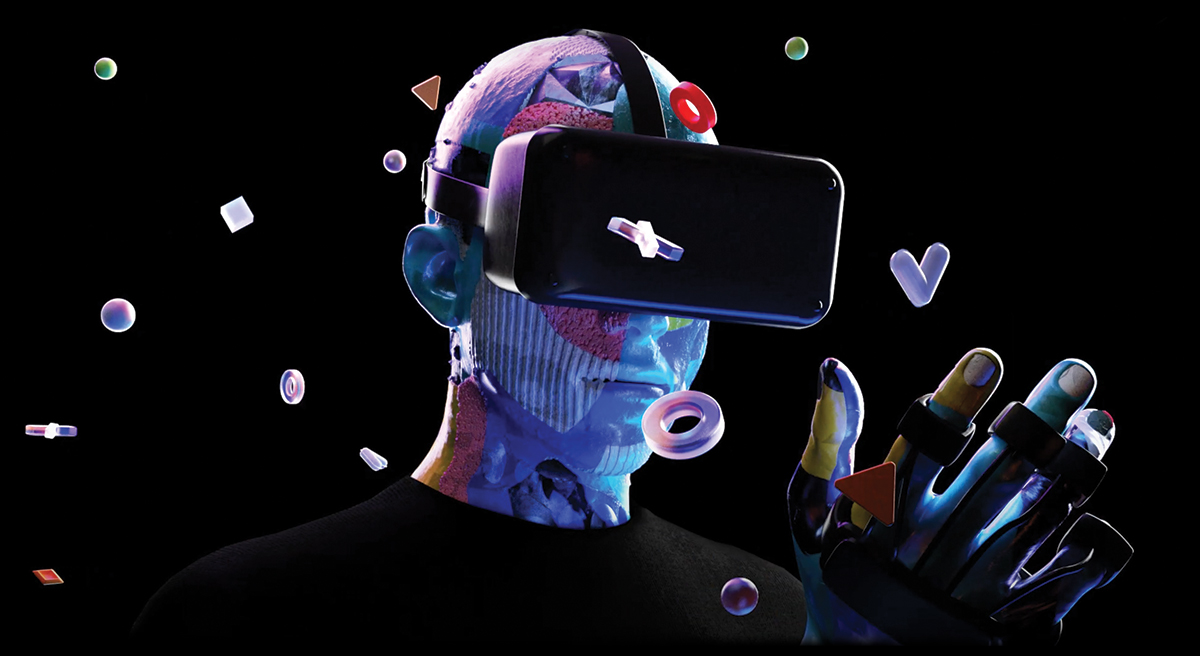
VR is a real-world simulation which offers new opportunities for industry training via digital products. Users will usually wear a headset and a handset to interact within a virtual environment.
AR aims to enhance real-world settings by overlaying digital elements onto real-world objects and the surrounding environment.
MR integrates elements of VR and AR to create a blended experience where cutting edge technology allows the virtual and physical to seamlessly interact.
Although it may have been initially developed for use in entertainment, XR technology has increasingly moved beyond the gaming industry for use in various workplace applications. According to market forecasts, the global market for XR is forecasted to surpass $1.1tn (£8bn) by 2030.
The popularity of XR systems and tools has been enhanced by easier access to state-of-the-art hardware and more sophisticated tech. For employers, it has become an affordable way of enhancing training and other development practises.
How studying a degree can help prepare you to work with immersive technologies
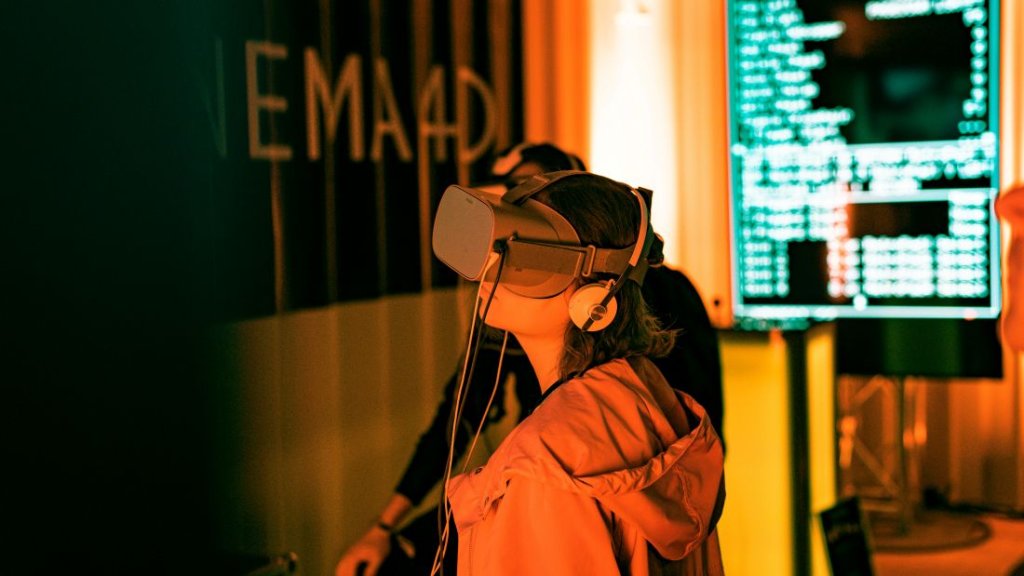
Our BA/BSc Creative Computing and AI course enables students to get to grips with some of the building blocks of spatial computing, including how to create interactive applications using tools like Unreal Engine.
Students become adept at virtual production and computer graphics via Adobe Creative Cloud. They will also build original creative computing and AI-driven projects alongside crafting a professional creative technology portfolio to showcase transferable skills suitable for use across a range of job opportunities.
Having AI embedded across the full length of the degree makes this course truly unique – with many UK creative technology degrees offering only a small selection of AI-focused modules.
Core skills for extended reality XR
Many of the latest creative AI tools and software are important for those wanting to work within AI, creative computing and XR.
Among them are platforms like Adobe Creative Cloud (Photoshop, Illustrator and Premiere Pro), ChatGPT, Microsoft Copilot, Ollama, LM Studio and Apple Vision Pro with Xcode and Swift.
A proficiency in games engines such as Unity or Unreal Engine is prized by employers while 3D tools such as Blender and Maya are also sought after too. There are programming languages including C++ and Python to consider as well as spatial design concepts too. Alongside these hard skills, being able to get along with others as part of a team and solve problems are other valuable attributes.
Key roles in virtual reality, augmented reality and mixed reality
From healthcare to manufacturing and other different industries, there are multiple sectors where a knowledge of XR can lead to enhanced employment opportunities.
Amid this, there are also a range of different roles too. Some include:
XR Developer / Software Engineer: The role of these developers is to create immersive experiences. Depending on the application and size of a project, they will build, code, and publish software using languages like C#, C++, Python, and Swift, often working with engines like Unity or Unreal Engine. They could be working alone or as part of a larger team.
XR Designer (UX/UI): These professionals act as architects for immersive and spatial experiences, crafting user interfaces (UI) and user experiences (UX) that are intuitive, engaging and go beyond the 2D experience. There are different roles within this depending on the size of a team including XR Product Designer and Interaction Designer.
3D Artist/Modeler: If you are a 3D artist, then you will be adept at coming up with 3D designs, textures and effects. Using briefs or concepts, you will craft 3D renders of different environments for use in AR or VR games or simulations. A priority is to ensure characters or landscapes are as authentic as possible to enhance a player’s or user’s engagement.
Technical Artist: This role requires different skills and sets between art and engineering. You will be responsible for optimising and enhancing 3D assets so they run efficiently on XR hardware systems.
XR Project Manager / Producer: This post-holder oversees the development of XR products from concept to launch, bridging technical teams and stakeholder requirements. This role requires a great understanding of the technicalities involved in bringing an XR experience to life. It also requires a depth of soft skills too, to ensure that teams know what they are responsible for and the deadlines they need to meet.
Study creative computing and ai
If you want to get to grips with the latest innovations and technologies shaping computing, then our Creative Computing and AI degree could be for you.
Our state-of-the-art facilities and expert tutors are well placed to give your career the best possible start in exciting and creative sector.