




TWO-YEAR ACCELERATED DEGREE:
£9,000 per year
You may also be eligible for a bursary or discount, please enquire with our friendly Admissions Team.
THREE-YEAR DEGREE:
£7,500 per year
You may also be eligible for a bursary or discount, please enquire with our friendly Admissions Team.
TWO-YEAR ACCELERATED DEGREE:
£11,750 per year
THREE-YEAR DEGREE:
£9,790 per year
TWO-YEAR ACCELERATED DEGREE:
£11,750 per year
THREE-YEAR DEGREE:
£9,790 per year
The annual tuition fee is fully funded via Student Finance England for eligible home-fee students.
TWO-YEAR ACCELERATED DEGREE:
£11,750 per year
THREE-YEAR DEGREE:
£9,790 per year
The annual tuition fee is fully funded via Student Finance England for eligible home-fee students.
TWO-YEAR ACCELERATED DEGREE:
£11,750 per year
THREE-YEAR DEGREE:
£9,790 per year
The annual tuition fee is fully funded via Student Finance England for eligible home-fee students.
TWO-YEAR ACCELERATED DEGREE:
International students (non-EU/EEA/Swiss)*: £17,000 per year
EU/EEA/Swiss students*: £11,440 per year
THREE-YEAR DEGREE:
International students (non-EU/EEA/Swiss)*: £16,250 per year
EU/EEA/Swiss students*: £9,535 per year
*Student visa required
TWO-YEAR ACCELERATED DEGREE:
International students (non-EU/EEA/Swiss)*: £17,000 per year
EU/EEA/Swiss students*: £11,440 per year
THREE-YEAR DEGREE:
International students (non-EU/EEA/Swiss)*: £16,250 per year
EU/EEA/Swiss students*: £9,535 per year
*Student visa required
TWO-YEAR ACCELERATED DEGREE:
International students (non-EU/EEA/Swiss)*: £17,000 per year
EU/EEA/Swiss students*: £11,440 per year
THREE-YEAR DEGREE:
International students (non-EU/EEA/Swiss)*: £16,250 per year
EU/EEA/Swiss students*: £9,535 per year
*Student visa required
TWO-YEAR ACCELERATED DEGREE:
International students (non-EU/EEA/Swiss)*: £17,000 per year
EU/EEA/Swiss students*: £11,440 per year
THREE-YEAR DEGREE:
International students (non-EU/EEA/Swiss)*: £16,250 per year
EU/EEA/Swiss students*: £9,535 per year
*Student visa required
TWO-YEAR ACCELERATED DEGREE:
International students (non-EU/EEA/Swiss)*: £17,000 per year
EU/EEA/Swiss students*: £11,440 per year
THREE-YEAR DEGREE:
International students (non-EU/EEA/Swiss)*: £16,250 per year
EU/EEA/Swiss students*: £9,535 per year
*Student visa required
September
September
January and September
January and September
September
Offers will be made to applicants who are expected to meet, or exceed the entry requirements below, in addition to supplying a personal statement:
SAE Institute will accept non-standard entry applications, which do not meet the 72 UCAS points or equivalent, and/or maths/English at level 2 or equivalent as required:
Students whose first language is not English will need a qualification that demonstrates competence in English, equivalent to UK GCSE (Level 2) grade 4 (c) or above.
Equivalent qualifications can be accepted, where these qualifications have been verified by ENIC and are adopted widely within the UK Higher Education sector, including:
- Listening – 17
- Writing – 17
- Speaking – 20
- Reading – 18
- International ESOL C1 Expert – pass in all four components
- International ESOL SELT B2 (Listening, Reading, Writing, Speaking) – minimum 33 in all components
- ESOL Integrated Skills in English II – pass in all components

WHY CHOOSE THIS COURSE?
- Design the player experience, build the world, create a community, not just visuals or code
- Learn the psychology behind what keeps players engaged
- Build and test playable games every trimester
- Prototype ideas fast using digital and physical methods
- Collaborate with Games Programmers and Game Artists
- Learn UX, UI, narrative, mechanics and systems design
- Discover which role suits you before specialising
- Build a portfolio of playable games and experiences
- Graduate in two years on the accelerated route
WHAT YOU WILL LEARN?
- Design game mechanics, systems and rules
- Apply player psychology and behavioural theory
- Prototype ideas using pen and paper and engine tools
- Build playable levels and environments
- Create UX and UI for interactive systems
- Design puzzles, challenges and reward loops
- Analyse why players return to certain games
- Test, observe and interpret player behaviour
- Communicate ideas clearly to artists and programmers
- Build a professional portfolio of playable games

YOUR GAME DESIGN JOURNEY BEGINS TODAY
What you can expect from your GAME DESIGN degree
The gaming industry has exploded in recent years thanks to exciting technological advances that have opened the door to dynamic, immersive experiences like never before. With gaming companies on the lookout for talented game designers, programmers and testers, now’s the perfect time to study a game design degree course.
At SAE, you’ll learn how to design and develop next-level video games while advancing your game development and design skills. Beat the competition by graduating industry-ready more quickly with a 2-year accelerated degree (all campuses) – saving money on course and accommodation fees – or take the more traditional 3-year route (across all campuses from September 2025 onwards).
Across your time at SAE, you’ll explore level design and narrative construction by completing real-world project briefs in a simulated games studio environment. You’ll gain advanced skills in industry-standard software packages, such as Unreal Engine 5, Unity 3D, Adobe Creative Suite, Autodesk Suite (Maya) and Visual Studio, plus expert proficiency in programming languages C# and C++.
SAE’s highly experienced Experts will introduce you to the professional world of game design, showing you the ropes in level design, playtesting, programming, UI/UX design and industry workflows. As you explore common game engines and asset development fundamentals, you’ll complete group projects and run playtesting for the games you’ve developed, validating your understanding of game design theory and application.
As you progress your studies, you’ll get ready to embrace real-world success thanks to SAE’s focus on practical learning, business planning skills and games industry knowledge. In your final trimester/semester, you’ll complete a Major Project in a chosen area of specialism – a perfect opportunity to connect with industry experts with a view to future game design employment.
At the end of your time with us, you’ll graduate equipped with the skills of a professional game developer and ready to launch into the industry as a game designer, game developer, concept artist, multimedia specialist or software engineer. Simply put, SAE’s groundbreaking game design degree really puts you ahead of the game.
START MY GAME DESIGN AUDIO JOURNEY
Course FAQs
What is the Games Design degree at SAE?
A practical degree that teaches you how to design engaging, interactive experiences, focusing on mechanics, player psychology, systems design and user experience.
Is this different from Games Programming or Game Art?
Yes. Games Design focuses on player interaction and experience rather than coding systems or creating 3D assets.
Is the course creative or technical?
Both, you develop creative design thinking and technical understanding of game engines and interactive systems.
How is the course taught?
Through hands-on, project-based learning that emphasises prototyping, playtesting, iteration and feedback. View modules.
Which study routes are available?
- Two year accelerated degree, UCAS code GD01
- Three year standard degree, UCAS code GD30
You can select your course duration when applying.
- Year 1
Foundations in player psychology, mechanics design, UX, UI, prototyping and collaborative workflows. - Year 2
Specialisation, advanced systems design, large playable projects, portfolio development and a Final Major Project.
This route is fast-paced, ideal if you want to graduate sooner and begin your career.
- Year 1
Core game design fundamentals, mechanics, play theory, prototyping and introductory UX. - Year 2
Systems design, level design, narrative integration and collaborative development work. - Year 3
Advanced projects, professional portfolio preparation, client briefs and a Final Major Project.
This route gives more time for experimentation, refinement and deeper skill development. Full module details
- Graduate a full year earlier
- Save £7,000 in tuition fees
- Enter the audio industry sooner
- Maintain momentum across three trimesters per year
- Build a professional portfolio in less time
This route suits students ready for intensive, practical study and early career progression.
- Learn at a steadier pace
- More time to explore creative direction
- Greater opportunity for experimentation and refinement
- More project opportunities and deeper portfolio building
This route suits students who want depth and flexibility in their production learning.
What facilities do students use?
Dedicated game labs, prototyping spaces, UX testing areas, collaborative studios and access to Games Programming, Game Art and Audio facilities.
Do I need my own computer?
No, campus provides required hardware, though many students choose to bring personal laptops.
What software do students use?
Unity, Unreal Engine, Figma, Photoshop, Audacity and tools for prototyping and testing.
Do students get exclusive deals?
Yes, SAE students receive exclusive educational licences and industry software discounts, giving access to professional tools at reduced or free student rates.
Will I have access to any game development software outside of campus?
Yes. You can access game development software for free on campus. When working off campus, you can take advantage of student discounts to purchase or subscribe to relevant software for personal use.
Students receive academic mentoring, wellbeing support, careers guidance and technical help throughout their studies.
Domestic Students
- Level 3 qualification or equivalent
- GCSE English and Mathematics at grades A to C, or 9 to 4, or equivalent
- Personal statement
- No portfolio required
Non-standard entry may include:
- A creative portfolio
- An academic essay
- Relevant experience
International Students
Entry requirements vary by country and include English language proficiency where applicable.
To view our full entry requirements, please click here.
Is Student Finance available?
Yes, for both the two year and three year degrees.
How are fees paid?
Through Student Finance, direct payment or approved funding routes.
Are scholarships available?
Yes. Scholarships and bursaries may be available, and the best way to access these is to apply for the course first. Even after you apply, you can still apply for scholarships.
Are there extra costs?
Optional costs may include personal equipment, storage and travel for industry events.
Graduates progress into roles such as: Game Designer, Level Designer, UX Designer, Systems Designer, Narrative Designer, Interaction Designer, Puzzle Designer and Creative Technologist.
Skills also apply to simulation, training, mobile design, web UX and immersive media.
- Visit the UCAS website
- Search for Games Design at SAE
- Enter UCAS code GD01 for the two year accelerated degree
- Enter UCAS code GD30 for the three year standard degree
- Upload your qualifications and personal statement
- Submit your application
- Receive your offer
- Accept your place through UCAS
(Institution code: S05 applies for all SAE courses.)
- Go to the SAE application form:
https://www.sae.edu/gbr/form/application-form/ - Complete the online application form and submit your details.
- Once your application is received, a member of the SAE admissions team will contact you to discuss your application and next steps.
- If your application is successful, you will be offered a place on the course.
- Accept your offer and complete enrolment, with the SAE team supporting you throughout the process and staying in contact with you right up until your start date.
- Start your course and begin learning, collaborating and taking the next step in your Games Design career.
Top tip: For peace of mind, applying directly to SAE is often faster than applying through UCAS and is ideal for international or late applicants.
What your course structure will look like
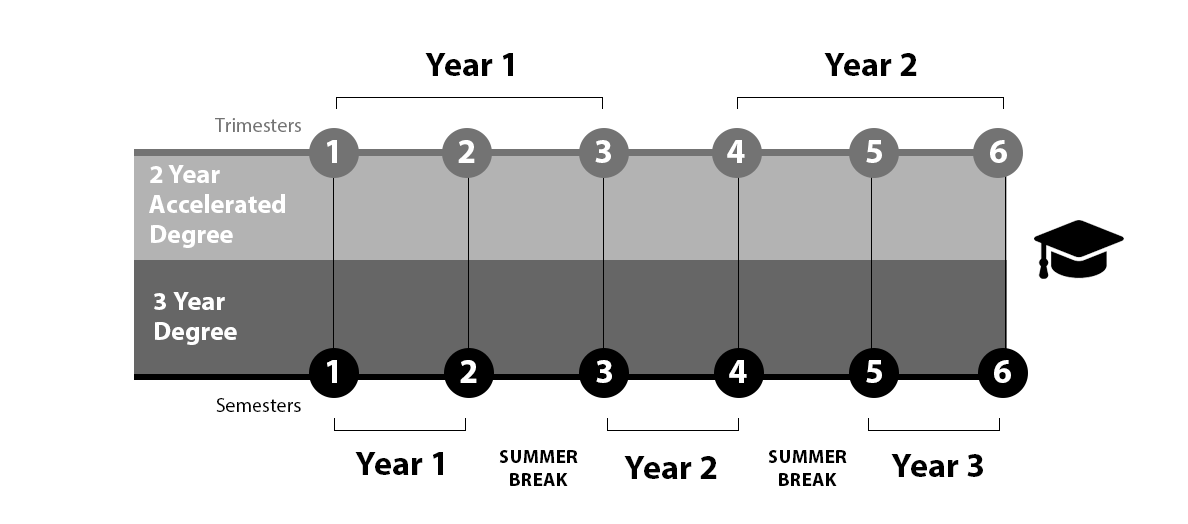
The BA (Hons) Games Design degree can be taken as an accelerated 2-year degree, split over 6 trimesters, or a traditional 3-year degree, split over 6 semesters. Its structure follows 3 distinct stages – each designed to help you develop specific skills. Dividing it this way ensures you graduate as a well-rounded designer with a universal understanding of the games design process.Stage 1 (T1/S1 and T2/S2) provides a foundation of core technical knowledge.
Stage 2 (T3/S3 and T4/S4) broadens your skills, exploring new areas of games design.
Stage 3 (T5/S5 and T6/S6) is all-encompassing, covering every aspect of games design from conception to completion, including managerial aspects like project management, finance and promotion.
Topics include:
- Programming basics
- Structured programming
- Object-oriented programming
- Introduction to algorithms
- Boolean algebra and numeral systems
- Vector arithmetic
- Version control
Topics include:
- Game design fundamentals
- Game engine basics
- Game mechanics
- Game mechanism
Topics include:
- Asset management and creation
- Playtesting and QA
- Data collection principals and ethics
- Statistics for game design
- UI/UX
- Level design
Topics include:
- Academic research and writing
- Game production basics (agile/scrum, kanban, risk analysis, etc)
- History and culture of games
- Ethics of video games
- Theories of play (flow, magic circle, MDA)
- Narrative in video games
Topics could cover:
- Rapid prototyping
- Games narrative
- Reward systems
- User interface and user experience (UI/UX) design
- World building
Topics could cover:
- Commercial games
- Modern marketplaces for games
- Games product lifecycle
- GAAS
- Mobile and platforms
- Business planning
- Marketing
Topics may include:
- Serious Games
- Game economies
- Playtesting
- Psychology of games
- MDA
- Accessibility
- Level Design
Any questions?
For any questions regarding our courses or if you’d like more information on how to apply for our Game Design degree at SAE, please contact our Enquiries Team on 03330 112 315 or email ukadmissions@sae.edu.