










TWO-YEAR ACCELERATED DEGREE:
£11,750 per year
THREE-YEAR DEGREE:
£9,790 per year
The annual tuition fee is fully funded via Student Finance England for eligible home-fee students.
TWO-YEAR ACCELERATED DEGREE:
£9,000 per year
You may also be eligible for a bursary or discount, please enquire with our friendly Admissions Team.
THREE-YEAR DEGREE:
£7,500 per year
You may also be eligible for a bursary or discount, please enquire with our friendly Admissions Team.
TWO-YEAR ACCELERATED DEGREE:
£11,750 per year
THREE-YEAR DEGREE:
£9,790 per year
The annual tuition fee is fully funded via Student Finance England for eligible home-fee students.
TWO-YEAR ACCELERATED DEGREE:
£11,750 per year
THREE-YEAR DEGREE:
£9,790 per year
TWO-YEAR ACCELERATED DEGREE:
£11,750 per year
THREE-YEAR DEGREE:
£9,790 per year
The annual tuition fee is fully funded via Student Finance England for eligible home-fee students.
TWO-YEAR ACCELERATED DEGREE:
International students (non-EU/EEA/Swiss)*: £17,000 per year
EU/EEA/Swiss students*: £11,440 per year
THREE-YEAR DEGREE:
International students (non-EU/EEA/Swiss)*: £16,250 per year
EU/EEA/Swiss students*: £9,535 per year
*Student visa required
TWO-YEAR ACCELERATED DEGREE:
International students (non-EU/EEA/Swiss)*: £17,000 per year
EU/EEA/Swiss students*: £11,440 per year
THREE-YEAR DEGREE:
International students (non-EU/EEA/Swiss)*: £16,250 per year
EU/EEA/Swiss students*: £9,535 per year
*Student visa required
TWO-YEAR ACCELERATED DEGREE:
International students (non-EU/EEA/Swiss)*: £17,000 per year
EU/EEA/Swiss students*: £11,440 per year
THREE-YEAR DEGREE:
International students (non-EU/EEA/Swiss)*: £16,250 per year
EU/EEA/Swiss students*: £9,535 per year
*Student visa required
TWO-YEAR ACCELERATED DEGREE:
International students (non-EU/EEA/Swiss)*: £17,000 per year
EU/EEA/Swiss students*: £11,440 per year
THREE-YEAR DEGREE:
International students (non-EU/EEA/Swiss)*: £16,250 per year
EU/EEA/Swiss students*: £9,535 per year
*Student visa required
TWO-YEAR ACCELERATED DEGREE:
International students (non-EU/EEA/Swiss)*: £17,000 per year
EU/EEA/Swiss students*: £11,440 per year
THREE-YEAR DEGREE:
International students (non-EU/EEA/Swiss)*: £16,250 per year
EU/EEA/Swiss students*: £9,535 per year
*Student visa required
January and September
January and September
January and September
January and September
September
Offers will be made to applicants who are expected to meet, or exceed the entry requirements below, in addition to supplying a personal statement:
SAE Institute will accept non-standard entry applications, which do not meet the 72 UCAS points or equivalent, and/or maths/English at level 2 or equivalent as required:
Students whose first language is not English will need a qualification that demonstrates competence in English, equivalent to UK GCSE (Level 2) grade 4 (c) or above.
Equivalent qualifications can be accepted, where these qualifications have been verified by ENIC and are adopted widely within the UK Higher Education sector, including:
- International ESOL C1 Expert – pass in all four components
- International ESOL SELT B2 (Listening, Reading, Writing, Speaking) – minimum 33 in all components
- ESOL Integrated Skills in English II – pass in all components
*Accepted on exceptional basis for the applicants whose local test centres are affected by closures due to Covid-19
From SAE to Screen
Our Film Production alumni are now working across film, television, documentary and digital content creation, taking the skills they developed at SAE straight into real productions and professional roles. From camera and cinematography to editing, post-production, directing and producing, graduates have moved into a wide range of creative and technical roles within the screen industries.
Djonny Chen
SAE's Film Production degree gave Djonny the platform to develop his craft as an award-winning director and cinematographer. The practical training and industry-led guidance strengthened his visual storytelling skills, helping him build a diverse portfolio across narrative, commercial and documentary work. Award-Winning Director & Cinematographer
Saul Murphy
Saul turned his Film Production training into a catalyst for creative leadership and production excellence. With access to professional-grade facilities and the mentorship of industry-experienced tutors, he went on to deliver projects for brands such as Bauer Media, Hat Trick Productions and Netflix, building a reputation in film and television as a versatile and reliable producer. Film and Television Production Manager & Filmmaker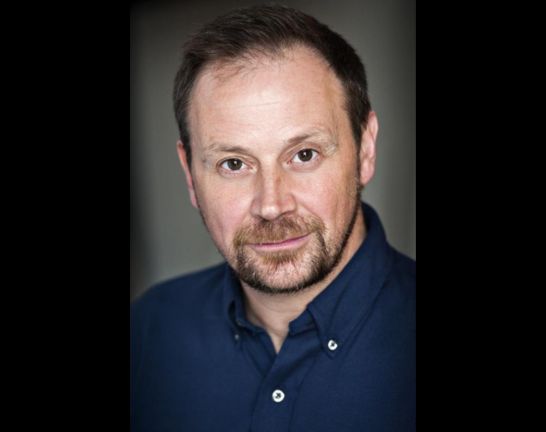
Jacob Crossley
Studying Film Production gave Jacob the creative foundation and production discipline he needed to step confidently into independent filmmaking. The hands-on training and access to professional facilities helped him write, produce and direct his debut feature film The Star That Fell From The Sky, and build a global network of collaborators. Independent Filmmaker
Samuel Mansell
Samuel used his Film Production training to build the industry insight and practical skills needed to direct and produce powerful creative work. With guidance from experienced tutors and access to professional-grade facilities, he went on to work with brands such as BBC Arts and Adobe, as well as platforms like SB.TV Young Creative, building a career that spans documentary, music-industry workshops and community-focused media. Filmmaker & Creative Producer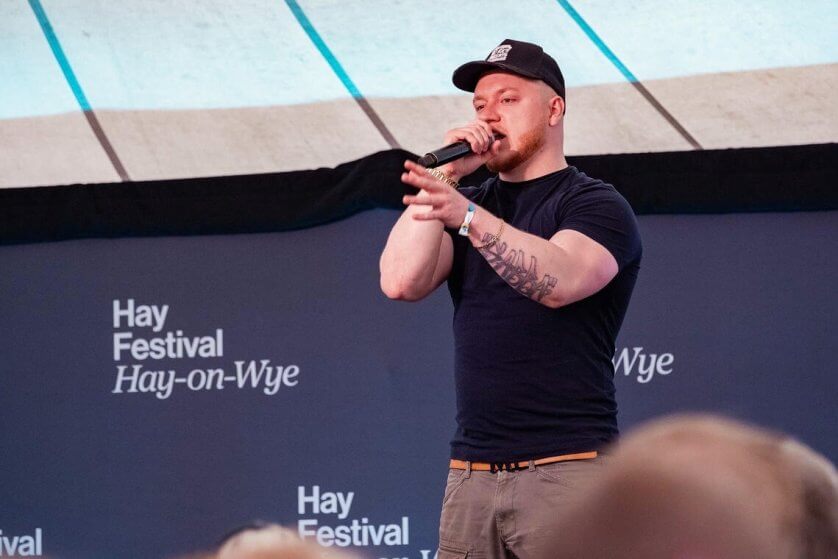
WHY CHOOSE THIS COURSE?
- Learn the full filmmaking pipeline from idea to final delivery
- Work across fiction, documentary and commercial production
- Gain hands-on experience on real sets and productions
- Explore directing, camera, lighting, sound, editing and producing
- Learn how to fund, distribute and promote your work
- Build a professional showreel and portfolio
- Learn professional set behaviour and communication
- Taught by active industry filmmakers
- Graduate in two years on the accelerated route
WHAT YOU WILL LEARN
- Storytelling, genre and screenwriting
- Directing and visual storytelling
- Working with actors
- Camera operation and cinematography
- Lighting and production planning
- Location sound recording and sound mixing
- Editing, colour grading and post-production workflows
- Documentary forms and ethics
- Producing, scheduling and production management
- Crowdfunding, funding strategies and festival submissions
- Research and professional development
YOUR FILM PRODUCTION JOURNEY STARTS TODAY
What you can expect from your FILM PRODUCTION degree
If you’re looking to launch a career in film, SAE’s Film Production degree will provide you with the expertise you need to get there. Taught as both an accelerated 2-year and typical 3-year option, you’ll learn essential technical film production skills and theoretical knowledge studying this film production degree, so you can succeed in your chosen area of the film industry – whether that’s as a director, producer, screenwriter, cinematographer, editor or another role entirely.
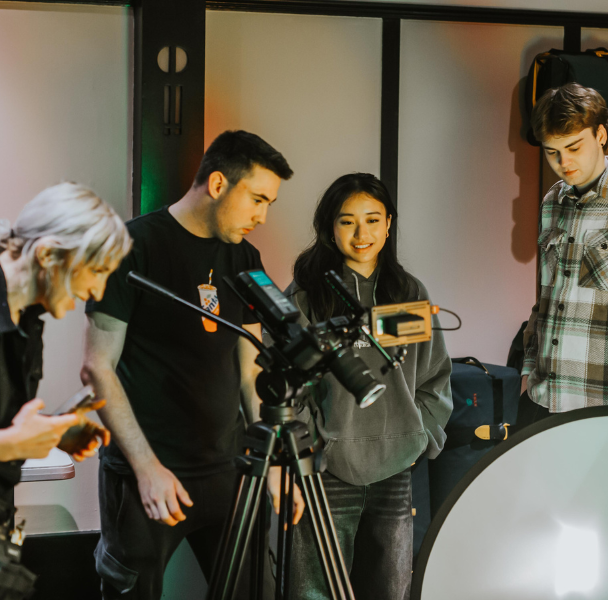
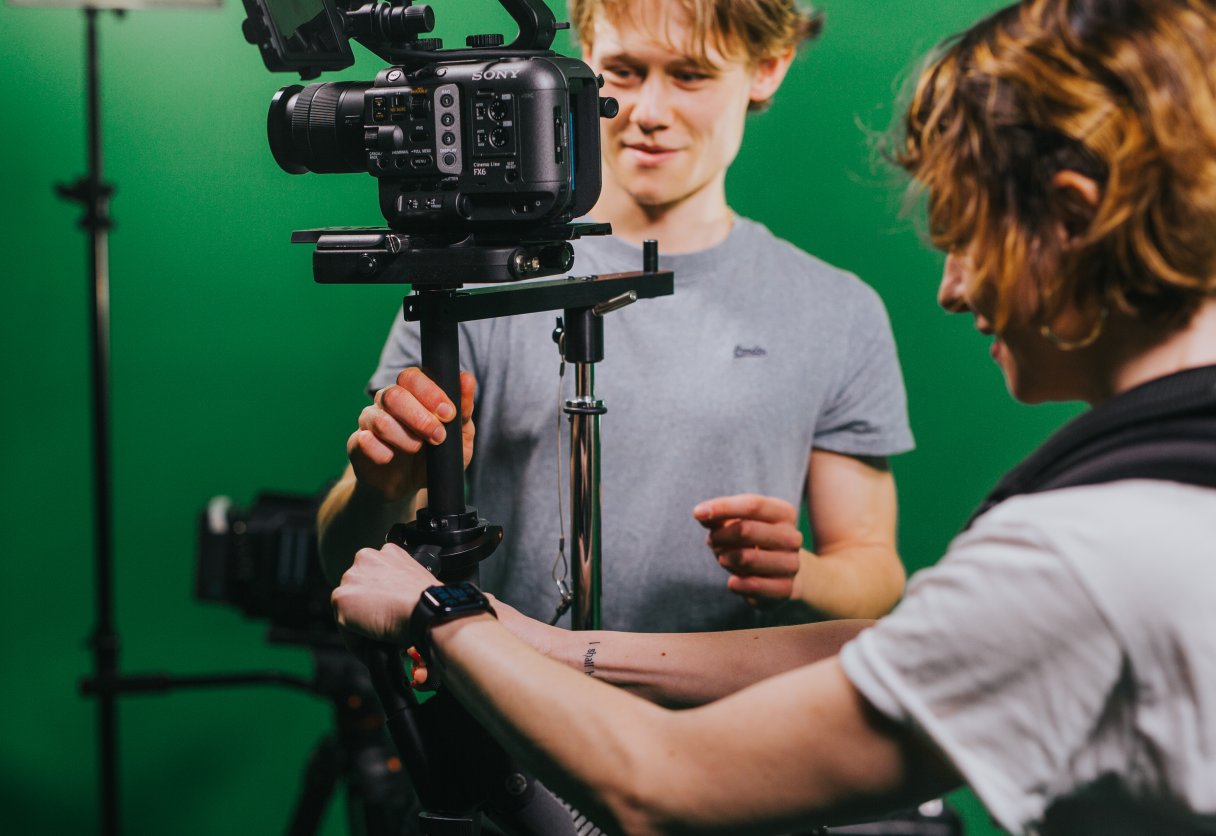
As an SAE student, you’ll get hands-on first-rate facilities, like green screens, editing studios and lighting rigs, to help bring your creative ideas to life. Across the course, you’ll experience the entire production workflow involved in making a film – from story development and script writing, pre-production planning and storyboarding, to filming and editing and, finally, marketing and distribution. You’ll also have access to SAE’s Industry-standard facilities, like green screens, editing studios and lighting rigs, to help bring your creative ideas to life.
YOUR FILM PRODUCTION JOURNEY STARTS TODAY!
COURSE FAQS
What is the Film Production degree at SAE?
A practical, industry-focused degree that teaches you how to develop, shoot, edit and deliver professional film and video projects, from narrative to documentary to commercial work
Is this different from media or digital content courses?
Yes, Film Production focuses on filmmaking workflows, production planning, camera work, lighting, sound, editing, post-production and visual storytelling.
Is the course creative or technical?
Both, you develop creative vision and professional technical skills across production, post-production and collaboration.
How is the course taught?
Through hands-on filmmaking projects, studio workshops, location shoots, collaborative crew work and professional production workflows. View modules.
Which study routes are available?
- Two year accelerated degree, UCAS code W612
- Three year standard degree, UCAS code FP30
- Year 1
Film fundamentals, story development, camera work, lighting, sound recording, editing and production planning - Year 2
Advanced production, collaborative projects, professional workflows and a Final Major Project
This fast-paced route is ideal if you want to graduate and enter the film industry sooner.
- Year 1
Core filmmaking foundations, narrative and documentary introduction, camera basics - Year 2
Intermediate production skills, sound, post-production and collaboration with other disciplines - Year 3
Advanced film projects, portfolio development, industry readiness and a Final Major Project
This route gives more time to explore creative roles, refine your craft and build confidence. View module detail
- Graduate faster and start your career sooner
- Save £7,000 in tuition fees
- Maintain momentum through continuous project work
- Build a full professional portfolio in a shorter timeframe
This route suits students ready for intensive, practical study and early career progression.
- Study at a more measured pace
- More time for creative experimentation
- Learn through multiple projects across studios
- Build confidence in both technical and creative workflows
This route suits students who want depth and flexibility in their production learning.
What facilities do students use?
You have access to film studios, high-spec digital cameras, lighting rigs, sound equipment, green screen spaces and editing suites across SAE campuses.
Do I need my own camera?
No, SAE provides industry-standard hardware and software for production and post.
What software do students use?
Editing and post tools like Adobe Premiere Pro, DaVinci Resolve, Avid Media Composer, plus motion graphics and colour grading platforms.
Do students get exclusive software deals?
Yes, SAE students receive exclusive educational licences and industry software discounts, meaning you can access professional tools at reduced or free student rates.
Will I have access to software outside of campus?
Yes. You can access software for free on campus. When working off campus, you’ll also be able to take advantage of student discounts to purchase or subscribe to software for personal use.
You receive academic support, technical help, wellbeing services, mental health resources and careers guidance throughout your studies.
Domestic Students
- Level 3 qualification or equivalent
- GCSE English at grade A* to C, or 9 to 4, or equivalent
- A personal statement
- No portfolio required
Non-standard entry may include:
- A creative portfolio
- An academic essay
- Relevant experience
International Students
Entry requirements vary by country and include English language proficiency where applicable.
To view our full entry requirements, please click here.
Is Student Finance available?
Yes, for both the two year and three year degrees.
How are fees paid?
Through Student Finance, direct payment or approved funding routes.
Are scholarships available?
Yes. Scholarships and bursaries may be available, and the best way to access these is to apply for the course first. Even after you apply, you can still apply for scholarships.
Are there additional costs?
Optional costs may include travel for shoots, personal storage or equipment accessories.
Graduates enter roles such as: Camera Assistant, Cinematographer, Editor, Director, Producer, Sound Recordist, Colourist, Production Assistant and Visual Storyteller.
Film skills also transfer into digital media, TV, advertising, content agencies and immersive tech.
- Visit the UCAS website
- Search for Film Production at SAE
- Enter UCAS code W612 for the two year accelerated degree
- Enter UCAS code FP30 for the three year standard degree
- Upload your qualifications and personal statement
- Submit the application
- Receive your offer
- Accept your place through UCAS
(Institution code: S05 applies for all SAE courses.)
- Go to the SAE application form:
https://www.sae.edu/gbr/form/application-form/ - Complete the online application form and submit your details.
- Once your application is received, a member of the SAE admissions team will contact you to discuss your application and next steps.
- If your application is successful, you will be offered a place on the course.
- Accept your offer and complete enrolment, with the SAE team supporting you throughout the process and staying in contact with you right up until your start date.
- Start your course and begin learning, collaborating and taking the next step in your Film Production career.
Top tip: For peace of mind, applying directly to SAE is often faster than applying through UCAS and is ideal for international or late applicants.
What your course structure will look like
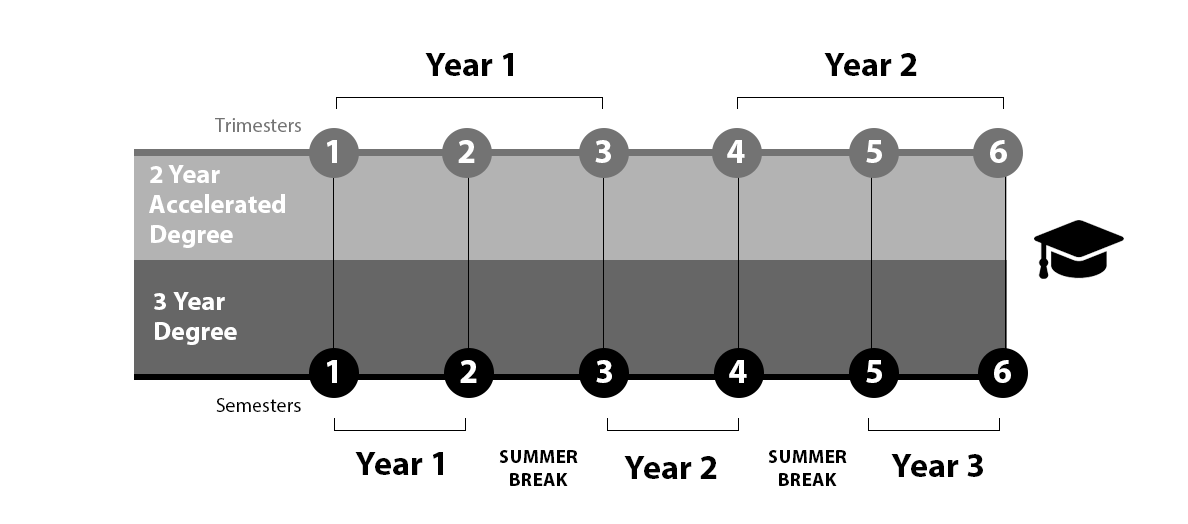
The BA (Hons) Film Production course can be taken as an accelerated 2-year degree, split over 6 trimesters, or a traditional 3-year degree, split over 6 semesters. Its structure follows 3 distinct stages – each designed to help you develop specific skills. Dividing it this way ensures you graduate as a well-rounded film production professional with a universal understanding of the entire film production process.Stage 1 (T1/S1 and T2/S2) provides a foundation of core technical knowledge.
Stage 2 (T3/S3 and T4/S4) broadens your skills, exploring new areas of film production.
Stage 3 (T5/S5 and T6/S6) is all-encompassing, covering every aspect of film production from conception to completion, including managerial aspects like project management, finance and promotion.
Topics include:
- Production planning
- Camera operation
- Lighting techniques
- Working in a crew
- Audio recording
- Edit theory
- Non-linear editing
- Short film narrative structure
- Story development
- Script writing
- Pitching
- Pre-visualisation
- Research
- Film analysis
- Production design
Topics include:
- Short film theory
- Pitching
- Genre theory
- Casting and rehearsals
- Blocking and staging
- Pre-visualisation
- Directing actors and working with crew
Topics include:
- Video editing
- Sound editing
- Montage theory and techniques
- Colour grading/correction
- Motion graphics
- Post-production workflow
Across a mixture of theoretical classes and discussion-based sessions with Experts and peers, you’ll expand your skills in finding, exploring and crafting engaging non-fiction narratives through a variety of storytelling modes. Working independently and as part of a creative team, you’ll work with single and multi-camera workflows and experiment with a variety of production and post-production skills to bring real-life stories to the screen.
Topics could cover:
- Documentary production planning
- Research
- Style and genre
- Factual film production practices
- Interviewing techniques
- Editing documentary
- Giving, receiving and learning from feedback
- Reflective and critical analysis
- Cultural contexts
If you choose to produce a short fiction film, you’ll continue to develop your storytelling, directing and cinematography skills as you bring your narrative to life. Potentially collaborating with SAE Animation and Audio Production students, you’ll ensure your film has high-quality visual effects, location sound, automated dialogue replacement (ADR) and soundtrack music – and is completed to a professional standard, ready for distribution and submission to film festivals.
If you choose the promotional film route, you’ll work on a series of creative briefs, collaborating with SAE students from courses such as Music Business, Audio Production and Content Creation and Online Marketing. Here you’ll be guided through the concept development process, as you gain skills working with clients and broaden your production abilities to include live-event/multi-camera production techniques and multi-clip editing.
Topics could cover:
- Fictional film production
- Promotional film production
- Working in a team
- Collaboration and communication
- Enterprise
- Marketing basics (target group analysis, product lifecycle, product development)
- Business planning (budgeting, financing)
- Pitching projects
- Film marketing and distribution
Across your subject area, you can choose to undertake a research project or take part in a structured industry-based live project, designed in collaboration with our Experts and film industry professionals. Whichever option you select, you’ll build a thorough understanding of professional practice in your field, as you align your professional development with your future career plans.
Combining creative media practice mastery and evidence-based decision making, you’ll develop a proposal for your final Major Project (Trimester 6), which will include negotiated and live industry projects. Projects are typically a fiction, non-fiction, experimental, promotional or transmedia film production, with you performing the role of producer, director, cinematographer or editor.
Topics could cover:
- Producing
- Directing
- Cinematography
- Editing
- Colour grading
- Promotional film production
Topics could cover:
- Scriptwriting
- Producing
- Directing
- Cinematography
- Editing
- Colour grading
- Promotional film production
Any questions?
For any questions regarding our courses or if you’d like more information on how to apply for our Film Production degree at SAE, please contact our Enquiries Team on 03330 112 315 or email ukadmissions@sae.edu.