







TWO-YEAR ACCELERATED DEGREE:
£11,750 per year
THREE-YEAR DEGREE:
£9,790 per year
The annual tuition fee is fully funded via Student Finance England for eligible home-fee students.
TWO-YEAR ACCELERATED DEGREE:
£9,000 per year
You may also be eligible for a bursary or discount, please enquire with our friendly Admissions Team.
THREE-YEAR DEGREE:
£7,500 per year
You may also be eligible for a bursary or discount, please enquire with our friendly Admissions Team.
TWO-YEAR ACCELERATED DEGREE:
£11,750 per year
THREE-YEAR DEGREE:
£9,790 per year
The annual tuition fee is fully funded via Student Finance England for eligible home-fee students.
TWO-YEAR ACCELERATED DEGREE:
£11,750 per year
THREE-YEAR DEGREE:
£9,790 per year
TWO-YEAR ACCELERATED DEGREE:
£11,750 per year
THREE-YEAR DEGREE:
£9,790 per year
Scholarship available:
Yes – click here to apply
The annual tuition fee is fully funded via Student Finance England for eligible home-fee students.
TWO-YEAR ACCELERATED DEGREE:
International students (non-EU/EEA/Swiss)*: £17,000 per year
EU/EEA/Swiss students*: £11,440 per year
THREE-YEAR DEGREE:
International students (non-EU/EEA/Swiss)*: £16,250 per year
EU/EEA/Swiss students*: £9,535 per year
*Student visa required
TWO-YEAR ACCELERATED DEGREE:
International students (non-EU/EEA/Swiss)*: £17,000 per year
EU/EEA/Swiss students*: £11,440 per year
THREE-YEAR DEGREE:
International students (non-EU/EEA/Swiss)*: £16,250 per year
EU/EEA/Swiss students*: £9,535 per year
*Student visa required
TWO-YEAR ACCELERATED DEGREE:
International students (non-EU/EEA/Swiss)*: £17,000 per year
EU/EEA/Swiss students*: £11,440 per year
THREE-YEAR DEGREE:
International students (non-EU/EEA/Swiss)*: £16,250 per year
EU/EEA/Swiss students*: £9,535 per year
*Student visa required
TWO-YEAR ACCELERATED DEGREE:
International students (non-EU/EEA/Swiss)*: £17,000 per year
EU/EEA/Swiss students*: £11,440 per year
THREE-YEAR DEGREE:
International students (non-EU/EEA/Swiss)*: £16,250 per year
EU/EEA/Swiss students*: £9,535 per year
*Student visa required
TWO-YEAR ACCELERATED DEGREE:
International students (non-EU/EEA/Swiss)*: £17,000 per year
EU/EEA/Swiss students*: £11,440 per year
THREE-YEAR DEGREE:
International students (non-EU/EEA/Swiss)*: £16,250 per year
EU/EEA/Swiss students*: £9,535 per year
*Student visa required
January and September
January and September
January and September
September
Offers will be made to applicants who are expected to meet, or exceed the entry requirements below, in addition to supplying a personal statement:
SAE Institute will accept non-standard entry applications, which do not meet the 72 UCAS points or equivalent, and/or maths/English at level 2 or equivalent as required:
Students whose first language is not English will need a qualification that demonstrates competence in English, equivalent to UK GCSE (Level 2) grade 4 (c) or above.
Equivalent qualifications can be accepted, where these qualifications have been verified by ENIC and are adopted widely within the UK Higher Education sector, including:
- Listening – 17
- Writing – 17
- Speaking – 20
- Reading – 18
- International ESOL C1 Expert – pass in all four components
- International ESOL SELT B2 (Listening, Reading, Writing, Speaking) – minimum 33 in all components
- ESOL Integrated Skills in English II – pass in all components
From SAE to the Studios
Our alumni are already working as audio engineers, producers and sound designers at leading companies across the industry. From major broadcasters to global music brands, they’ve taken the skills they learned here straight into real studios and professional roles, and their journeys show exactly where this path can take you.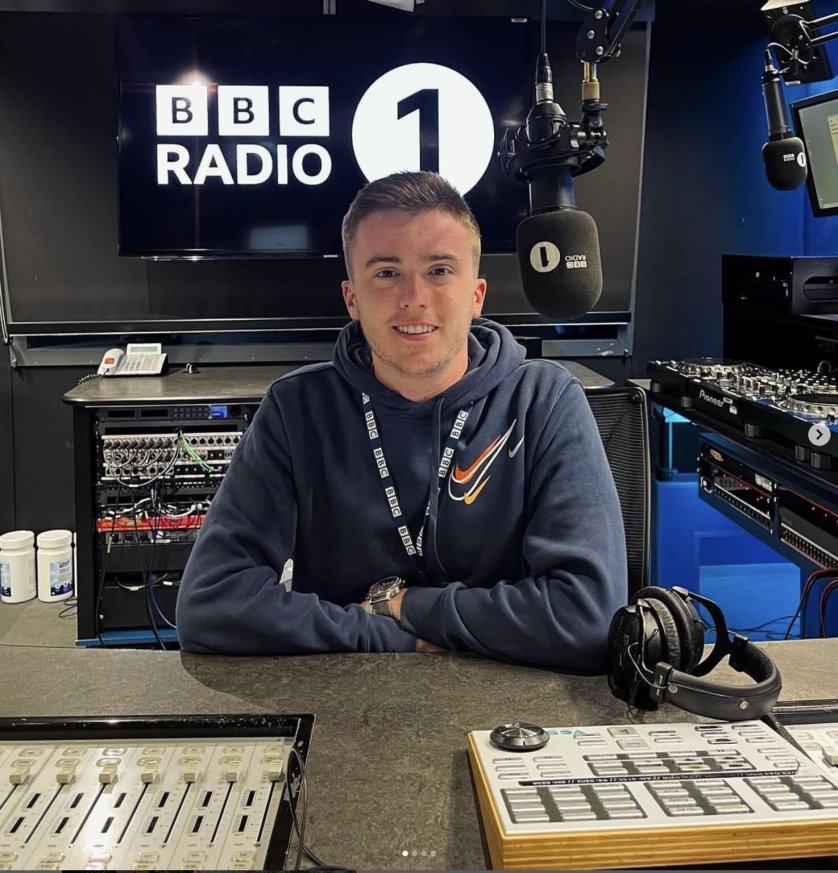
Nigel Godrich
Nigel Godrich studied Audio Production at SAE and has since worked with major artists including Radiohead, Beck, Paul McCartney, Red Hot Chili Peppers, Atoms for Peace, The Smile and IDLES, as well as contributing to film projects such as Scott Pilgrim vs. the World. Grammy-winning Record Producer and Audio Engineer
Rheanne Myrie‑Formstone
Developing real-world project experience allowed Rheanne to grow her skills in audio technology and studio work. The course helped her turn her passion for sound into a professional pathway, giving her the confidence and portfolio needed to move into audio technician and studio collaborator roles. Audio Technician & Studio Collaborator
Joe Exler
Working through the Audio Production degree gave Joe the technical grounding and creative confidence he needed to step into professional sound design. The hands-on studio access and guidance from industry-experienced tutors helped him build a strong portfolio, leading to his role as Senior Sound Designer at Global. Senior Sound Designer, Capital FM & The Official Big Top 40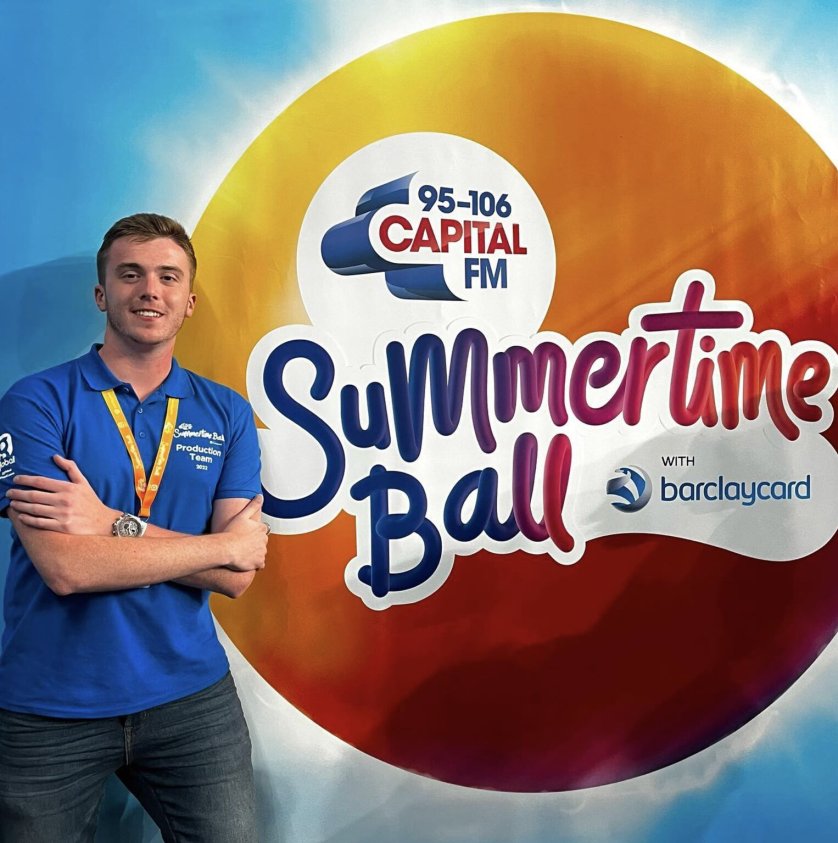
Mikita Skye Alford
Gaining practical experience in professional studios helped Mikita develop the versatility to work across music production and live events. Studying in London gave her the industry exposure she needed, and the support at SAE helped her turn her creative ambition into real opportunities in the audio world. Music Producer & Live Events Specialist
WHY CHOOSE AUDIO PRODUCTION?
- Learn every major area of audio production including music, live sound, post-production and game audio
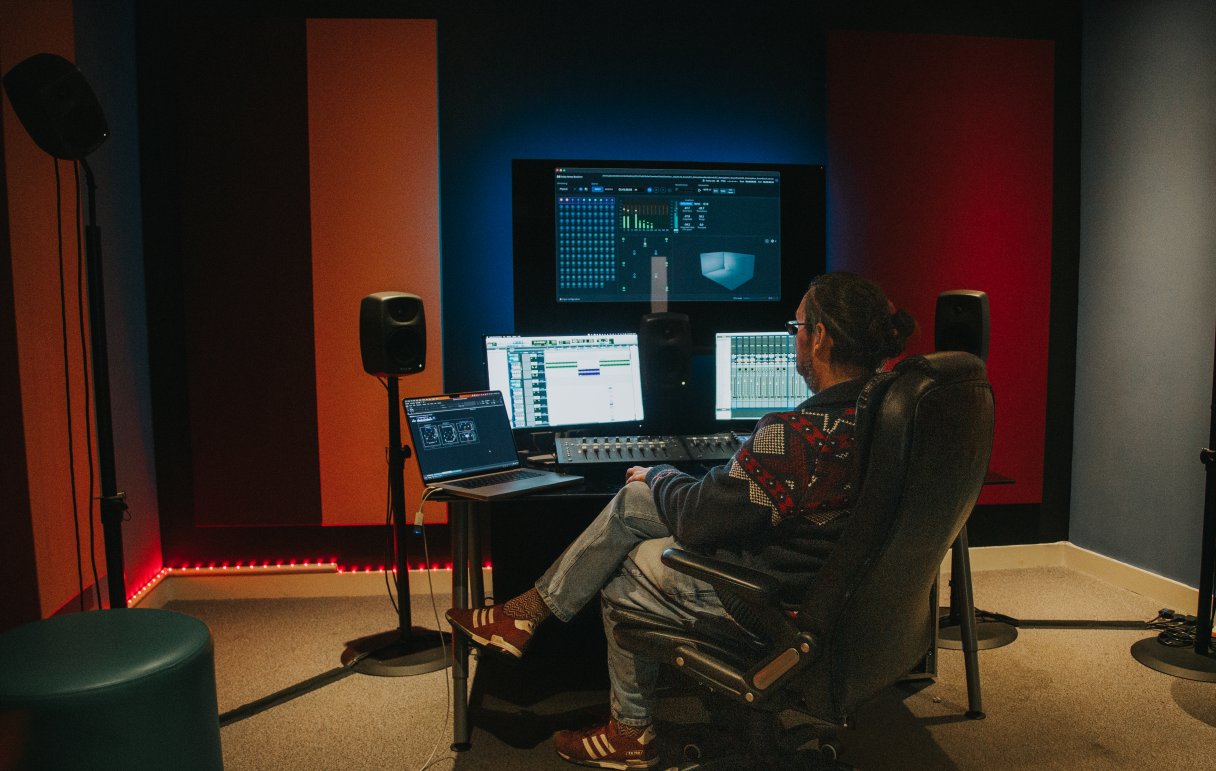
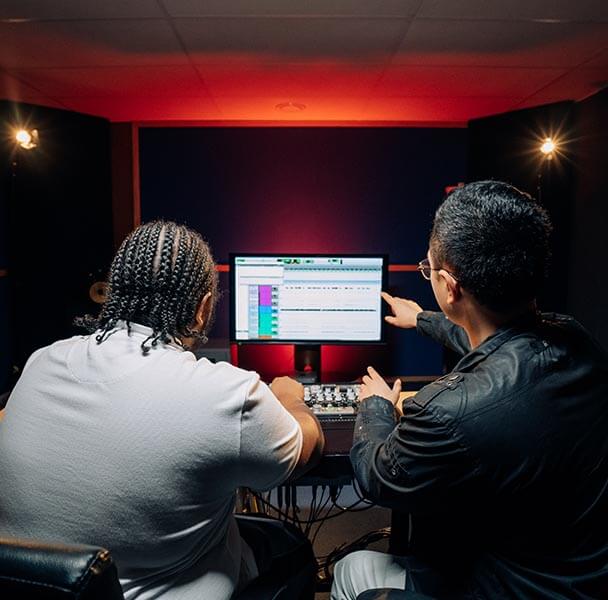
- Develop hands-on experience in professional studios and live rooms
- Create music, mix and master tracks, record artists and produce electronic music
- Work on sound for film, TV, animation, radio drama and games
- Train with consoles and equipment found in real commercial studios
- Learn industry standard software including Pro Tools Ultimate and Ableton Live
- Study in small classes for maximum studio access and personalised feedback
- Graduate with a well-rounded portfolio and real industry skills
WHAT YOU WILL LEARN?
- Sound theory and acoustics
- Studio recording techniques and microphone placement
- Music production, mixing and mastering
- Electronic music production using Ableton Live
- Audio post-production for film, TV, games, podcasts and animation
- Live sound engineering for venues and events
- Foley, ADR and location recording
- Working with middleware including FMOD
- Game audio systems with Unreal Engine
- Audio editing workflows and creative sound design
- Professional practices for studios, clients and live shows
- Project management and collaboration across disciplines
YOUR AUDIO JOURNEY STARTS TODAY
WHAT YOU CAN EXPECT FROM YOUR Audio Production DEGREE?
SAE’s BA BSc Hons Audio Production is designed for students who want to understand, create and shape sound across all creative media. You will learn the technical foundations behind audio engineering alongside the creative artistry of music production and sound design.
From your first trimester, you will be recording artists, mixing tracks, producing electronic music and working with sound for film, TV and animation. You will use industry standard equipment and software across professional studio environments.
This is a hands-on, practical-first degree, ideal for learners who want to experiment, take risks and learn by doing. You will receive constant support and personalised feedback in small class groups, developing the technical confidence and creative flair needed in today’s audio industries.
As you progress, you can follow flexible pathways, developing specialist interests in studio engineering, mixing, live sound, game audio, acoustics, music production or post-production.
By graduation, you will have an extensive portfolio of real work, ready for employers, clients or postgraduate study.
START MY AUDIO PRODUCTION CAREER TODAY
Course FAQS
What is the Audio Production degree at SAE?
A practical degree that teaches you professional recording, mixing, mastering, live sound, studio workflows and creative audio production for music, film, games and digital media.
Is this course creative or technical?
Both, you develop creative audio skills and technical studio workflows used in professional environments.
Do I need experience to apply?
No, students of all levels are welcome, beginners and improvers are supported.
Is Music Production the same as Audio Production?
No. Music production focuses specifically on creating and producing music, including recording artists, arranging tracks, and shaping the final sound.
Audio production is a broader field. It includes music production, but also covers areas such as sound design, film and TV audio, game audio, podcast production, and post-production.
At SAE, our Audio Production degree teaches the full range of industry audio skills, so you can work in music as well as other areas of the creative industries.
How is the course taught?
Through hands-on projects, professional studio training, real-world recording sessions and collaborative audio production work. View modules
Which study routes are available?
- Two year accelerated degree, UCAS code W616
- Three year standard degree, UCAS code AP30
- Year 1
Recording fundamentals, signal flow, studio etiquette, microphone techniques, mixing and digital audio basics - Year 2
Advanced mixing, mastering, live sound, professional workflows, post-production and a Major Project
This accelerated route lets you graduate sooner and enter the industry quickly with a strong portfolio.
- Year 1
Core audio foundations in recording, editing, mixing and studio practices - Year 2
Intermediate production, creative techniques, live recordings, group projects and specialist workflows - Year 3
Advanced audio production, mastering workflows, post-production, collaborative briefs and a Final Major Project
This route gives more time to refine techniques and broaden your creative range.
- Graduate a full year earlier
- Save £7,000 in tuition fees
- Enter the audio industry sooner
- Maintain momentum across three trimesters per year
- Build a professional portfolio in less time
This route suits students ready for intensive, practical study and early career progression.
- Study at a more measured pace
- More time for creative experimentation
- Learn through multiple projects across studios
- Build confidence in both technical and creative workflows
This route suits students who want depth and flexibility in their production learning.
What facilities do students use?
Professional studios, control rooms, live sound rigs, recording booths, mixing suites and specialised audio hardware.
Do I need my own equipment?
No, all core gear is provided, although many students bring personal headphones, MIDI gear or instruments.
What software do students use?
Pro Tools, Ableton Live, Logic Pro, industry-standard plug-ins, DAWs, sound design tools and project management tools.
Will I have access to DAW software outside of campus?
Yes. You can access DAW software for free on campus. When working off campus, you’ll also be able to take advantage of student discounts to purchase or subscribe to DAW software for personal use.
Do students receive exclusive software deals?
Yes, SAE students benefit from exclusive educational licences and industry software deals, giving access to professional audio tools at reduced or free student rates.
Throughout your studies you have access to academic mentoring, technical help, wellbeing services, mental health support and careers guidance.
Domestic Students
- Level 3 qualification or equivalent
- GCSE English and Mathematics at grades A to C, or 9 to 4, or equivalent
- Personal statement
- No portfolio required
Non-standard entry may include:
- A creative portfolio
- An academic essay
- Relevant experience in audio or music
International Students
Entry requirements vary by country and include English language proficiency where applicable.
To view our full entry requirements, please click here.
Is Student Finance available?
Yes, for both the two year and three year degrees.
How are fees paid?
Through Student Finance, direct payment or approved funding routes.
Are scholarships available?
Yes. Scholarships and bursaries may be available, and the best way to access these is to apply for the course first. Even after you apply, you can still apply for scholarships.
Are there extra costs?
Optional costs may include personal equipment, storage, software bundles and travel for events.
Graduates progress into roles such as: Audio Engineer, Music Producer, Mixing Engineer, Mastering Engineer, Live Sound Technician, Post-Production Audio Specialist, Sound Designer, Music Editor and Studio Manager.
Skills also apply to broadcast, games, film, digital media and freelance work.
- Visit the UCAS website
- Search for Audio Production at SAE
- Enter UCAS code W616 for the two year accelerated degree
- Enter UCAS code AP30 for the three year standard degree
- Upload your qualifications and personal statement
- Submit the application
- Receive your offer
- Accept your place through UCAS
(Institution code: S05 applies for all SAE courses.)
- Go to the SAE application form:
https://www.sae.edu/gbr/form/application-form/ - Complete the online application form and submit your details.
- Once your application is received, a member of the SAE admissions team will contact you to discuss your application and next steps.
- If your application is successful, you will be offered a place on the course.
- Accept your offer and complete enrolment, with the SAE team supporting you throughout the process and staying in contact with you right up until your start date.
- Start your course and begin learning, collaborating and taking the next step in your Audio Production career.
Top tip: For peace of mind, applying directly to SAE is often faster than applying through UCAS and is ideal for international or late applicants.
What your course structure will look like
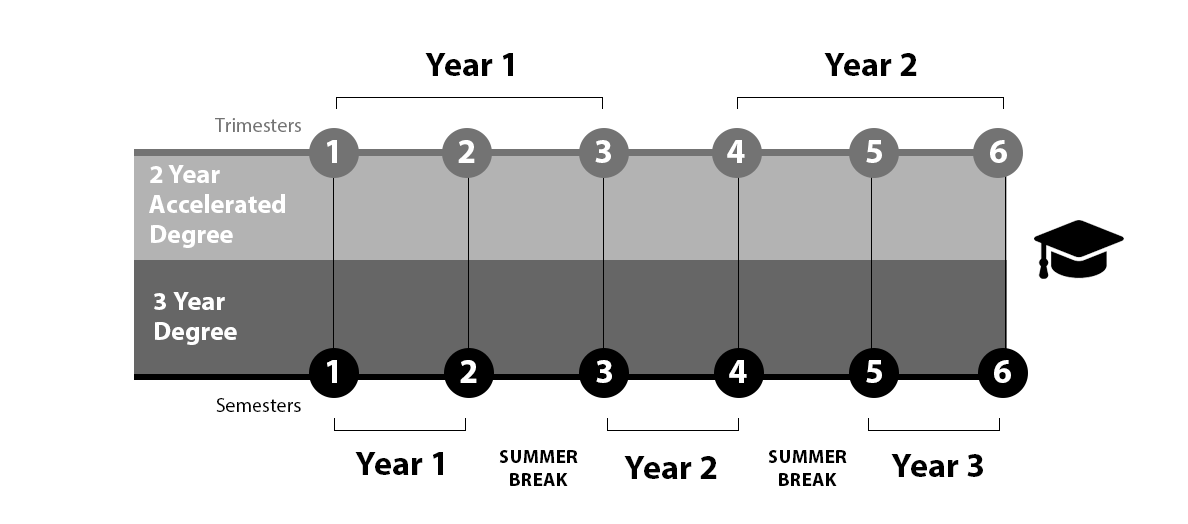
The BA/BSc (Hons) Audio Production course can be taken as an accelerated 2-year degree, split over 6 trimesters, or a traditional 3-year degree, split over 6 semesters. Its structure follows 3 distinct stages – each designed to help you develop specific skills. Dividing it this way ensures you graduate as a well-rounded audio production professional with a universal understanding of the entire audio production process.Stage 1 (T1/S1 and T2/S2) provides a foundation of core technical knowledge.
Stage 2 (T3/S3 and T4/S4) broadens your skills, exploring new areas of audio production.
Stage 3 (T5/S5 and T6/S6) is all-encompassing, covering every aspect of audio production from conception to completion, including managerial aspects like project management, finance and promotion.
A highly practical course, you’ll familiarise yourself with the concepts of signal routing and the basic applications of microphones and loudspeakers, including the set-up of sound reinforcement systems.
Topics include:
- Sound Theory
- Decibels
- Acoustics
- Introduction to DAWs and sequencing environments
- Equalisation (EQ), effects and dynamic range processors
- Basic audio signal routing and wiring
- Electronics
- Microphones and loudspeakers
Topics include:
- Digital Audio Workstations
- Synthesis and sampling
- MIDI
- Basic sound design
- Effects processing
- Dynamics processing
- Mixing
- Intro to music theory
- Presentation techniques
Topics include:
- Signal flow principles and applications
- Signal flow diagrams
- Signal flow applications
- Recording procedures and techniques
- Mixing procedures and techniques
- Digital Audio Workstations
- Audio editing
- Principles of signal processing equalisation, dynamics, and effects
- Time and pitch correction
Topics include:
- Console types and differences
- Components of consoles
- Workflows: analogue, digital, hybrid
- Integrating hardware and DAWs
- Care and maintenance
- Production planning
- The recording process
- The mixing process
- Audio editing techniques
- Finalising
- Sound restoration
- Aesthetics and musical context
Studying sound design and post-production techniques across a range of media, you’ll complete practical sound-to-media projects in these areas.
Topics could cover:
- Sound for media (film/TV, games, animation, audio storytelling)
- Sound design and editing
- Foley recording
- Music and electronic music composition
- Immersive audio
Expanding on skills gained in earlier modules, you’ll increase your knowledge of mixing techniques to incorporate hybrid and analogue console and outboard equipment workflows. You’ll also explore mastering in the context of the final delivery format of your project.
Via your project, you’ll discover fundamental business, marketing and finance concepts, as you plan for the marketing, promotion and release of your music production..
Across the module, you’ll be encouraged to collaborate with students from other SAE disciplines outside of your audio production course to create additional media for your project, including graphic design, artwork, music videos and websites.
Topics could cover:
- Advanced music production tools and techniques
- Large format consoles
- Advanced recording techniques
- Location music recording
- Live sound / advanced electronic music production
- Mixing on a large format console
- Hybrid workflows
- Mastering
- Business, legal issues, marketing and finance
Exploring an audio-specific area of interest, you can choose to pursue a research project in your field of specialisation or undertake a structured industry-based live project designed in collaboration with your Experts and the wider industry. Using your mastery in creative media practice in combination with evidence-based decision making, you’ll develop a proposal for your final Major Project (Trimester 6). Study areas could include programming environments, electroacoustic music, electronic composition, game audio, film sound and immersive audio... or something else entirely.
In this module, you’ll create the proposal for your final Major Project with guidance from our Experts. You’ll also develop a variety of academic and professional skills as you prepare to progress to postgraduate studies or embark on your career journey.
This module is a great opportunity to refine your skills, as you develop connections with industry professionals and create a body of work that showcases your knowledge and skills to date.
Topics could cover:
- Programming environments
- Electroacoustic music
- Composition
- Game audio
- Film sound
- Innovation and entrepreneurship
- Live sound and events
- Immersive audio
Depending on your topic, you can use it as a springboard into industry, an opportunity to establish your own business or as a way to make connections with industry professionals that may lead to future employment.
Any questions?
For any questions regarding our courses or if you’d like more information on how to apply for our Audio Production degree at SAE, please contact our Enquiries Team on 03330 112 315 or email ukadmissions@sae.edu.