










TWO-YEAR ACCELERATED DEGREE:
£11,750 per year
THREE-YEAR DEGREE:
£9,790 per year
The annual tuition fee is fully funded via Student Finance England for eligible home-fee students.
TWO-YEAR ACCELERATED DEGREE:
£9,000 per year
You may also be eligible for a bursary or discount, please enquire with our friendly Admissions Team.
THREE-YEAR DEGREE:
£7,500 per year
You may also be eligible for a bursary or discount, please enquire with our friendly Admissions Team.
TWO-YEAR ACCELERATED DEGREE:
£11,750 per year
THREE-YEAR DEGREE:
£9,790 per year
The annual tuition fee is fully funded via Student Finance England for eligible home-fee students.
TWO-YEAR ACCELERATED DEGREE:
International students (non-EU/EEA/Swiss)*: £17,000 per year
EU/EEA/Swiss students*: £11,440 per year
THREE-YEAR DEGREE:
International students (non-EU/EEA/Swiss)*: £16,250 per year
EU/EEA/Swiss students*: £9,535 per year
*Student visa required
TWO-YEAR ACCELERATED DEGREE:
International students (non-EU/EEA/Swiss)*: £17,000 per year
EU/EEA/Swiss students*: £11,440 per year
THREE-YEAR DEGREE:
International students (non-EU/EEA/Swiss)*: £16,250 per year
EU/EEA/Swiss students*: £9,535 per year
*Student visa required
TWO-YEAR ACCELERATED DEGREE:
International students (non-EU/EEA/Swiss)*: £17,000 per year
EU/EEA/Swiss students*: £11,440 per year
THREE-YEAR DEGREE:
International students (non-EU/EEA/Swiss)*: £16,250 per year
EU/EEA/Swiss students*: £9,535 per year
*Student visa required
January and September
January and September
January and September
September
Offers will be made to applicants who are expected to meet, or exceed the entry requirements below, in addition to supplying a personal statement:
SAE Institute will accept non-standard entry applications, which do not meet the 72 UCAS points or equivalent, and/or maths/English at level 2 or equivalent as required:
Students whose first language is not English will need a qualification that demonstrates competence in English, equivalent to UK GCSE (Level 2) grade 4 (c) or above.
Equivalent qualifications can be accepted, where these qualifications have been verified by ENIC and are adopted widely within the UK Higher Education sector, including:
- Listening – 17
- Writing – 17
- Speaking – 20
- Reading – 18
- International ESOL C1 Expert – pass in all four components
- International ESOL SELT B2 (Listening, Reading, Writing, Speaking) – minimum 33 in all components
- ESOL Integrated Skills in English II – pass in all components

WHY CHOOSE THIS COURSE?
- Learn full stack web and mobile development
- Build real websites and applications from the first trimester
- Combine front end, back end and mobile skills
- Gain SEO and digital marketing understanding
- Work with real or simulated client briefs
- Use GitHub to build a live professional portfolio
- Learn teamwork, communication and project planning
- Collaborate with Games, Film, Audio and Content students
- Graduate in two years on the accelerated route
WHAT YOU WILL LEARN?
- Build responsive websites using HTML, CSS and JavaScript
- Design user interfaces using UI and UX principles
- Program back end systems using Python
- Manage databases using MySQL
- Develop mobile apps using Java and Android Studio
- Apply SEO and online marketing methods
- Design and host websites that perform well in search rankings
- Research accessibility and layout systems
- Use GitHub for version control and portfolio building
- Produce full stack final projects for employers

YOUR WEB DEVELOPMENT JOURNEY BEGINS TODAY
What you can expect from your degree
Keen to kickstart your web development journey? At SAE, you’ll study in our state-of-the-art Mac labs, equipped with web development hardware and software essentials from top brands like Adobe and React. You’ll learn to code in languages including JavaScript, Python, CSS, SQL and HTML and explore advanced concepts such as responsive design and colour theory. As an SAE student, you’ll have full access to Adobe Creative Cloud programmes on campus, including Photoshop, Illustrator and Dreamweaver, to help you create wireframes, mock-ups and web designs. So, whether you’re passionate about crafting user-friendly interfaces or building robust back-end systems, you’ll learn to use the latest website technologies with confidence thanks to SAE’s web developer degree.
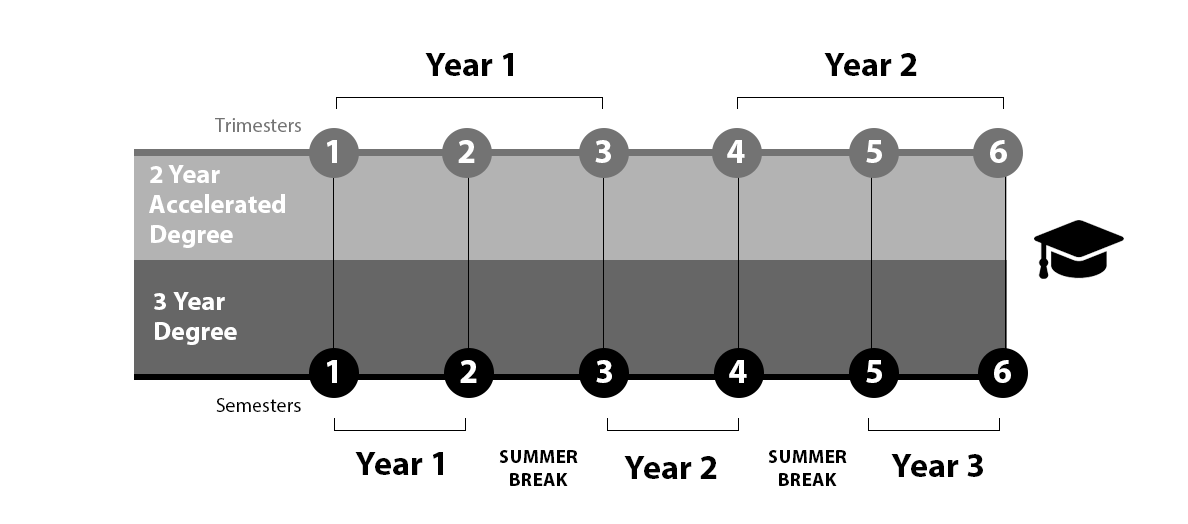
Across your studies, you can decide to take a fast-tracked path towards an exciting creative career with our 2-year degree in web development, or choose a more traditional 3-year university route across all campuses. Studying the accelerated 2-year degree, you’ll reach your career goals sooner with our unique trimester-based approach, meaning a role as a web designer and/or developer will be quickly in your sights. A 3-year degree allows you to study at a regular university pace and take advantage of traditional summer breaks.
START MY WEB DEVELOPMENT JOURNEY
Course FAQs
What is the Web Development degree at SAE?
A practical degree that teaches you to build modern websites and applications, combining front end, back end, UX, databases and digital strategy.
Is the course creative or technical?
Both, you learn technical coding skills and creative digital design, with industry-aligned project work.
What kinds of careers does it prepare me for?
Careers in web development, front end development, full stack roles, UX/UI design, digital product development, tech consulting and more
How is the course taught?
Through hands-on projects, real coding practice, collaborative briefs and iterative development work that mirrors industry workflows. View modules
Which study routes are available?
- Two year accelerated degree, UCAS code W281
- Three year standard degree, UCAS code WD30
- Year 1
Foundations in HTML, CSS, JavaScript, responsive design, UX, UI and front end development. - Year 2
Back end development, Python and databases, SEO, analytics, web applications and a Major Project.
This route suits students ready for intensive, practical study and early career progression. View modules
- Year 1
Core technical fundamentals, introduction to web design and coding basics. - Year 2
Front end, back end development, UX/UI collaboration and intermediate projects. - Year 3
Advanced topics, full stack applications, digital strategy, marketing integration and a final Major Project.
This route suits students who want depth and flexibility in their production learning.View modules
What facilities do students use?
State-of-the-art PC and Mac labs equipped with web development hardware and software essentials. sae.edu
Do I need my own computer?
No, required hardware is provided on campus, although many students choose to bring personal laptops.
What software do students use?
You will use languages and tools including HTML, CSS, JavaScript, Python, SQL and frameworks, plus Adobe Creative Cloud programmes such as Photoshop and Illustrator
Do students get exclusive deals?
Yes, SAE students receive exclusive software licences and industry deals, giving access to professional tools at reduced or free student rates.
Students receive academic mentoring, learning resources, wellbeing services, mental health support and careers guidance throughout their studies.
Domestic Students
- Level 3 qualification or equivalent
- GCSE English at grade A* to C, or 9 to 4, or equivalent
- No portfolio required
Non-standard entry may include:
- A portfolio of related work
- Academic essay
- Relevant experience
International Students
Entry requirements vary by country and include English language proficiency where applicable.
To view our full entry requirements, please click here.
Is Student Finance available?
Yes, for both the two year and three year degrees.
How are fees paid?
Through Student Finance, direct payment or approved funding routes.
Are scholarships available?
Yes. Scholarships and bursaries may be available, and the best way to access these is to apply for the course first. Even after you apply, you can still apply for scholarships.
Are there extra costs?
Optional costs include personal equipment, storage and industry event travel.
Graduates enter roles such as: Front end Developer, Back end Developer, Full Stack Developer, UX/UI Designer, Web Engineer, Digital Product Developer and SEO Specialist.
Web skills are in demand across tech, creative agencies, startups, digital consultancies and international studios.
- Visit the UCAS website
- Search for Web Development at SAE
- Use UCAS code W281 for the two year accelerated route
- Use UCAS code WD30 for the three year standard route
- Upload your qualifications and personal statement
- Submit your application
- Receive your offer
- Accept your place through UCAS
(Institution code: S05 applies for all SAE courses.)
- Go to the SAE application form:
https://www.sae.edu/gbr/form/application-form/ - Complete the online application form and submit your details.
- Once your application is received, a member of the SAE admissions team will contact you to discuss your application and next steps.
- If your application is successful, you will be offered a place on the course.
- Accept your offer and complete enrolment, with the SAE team supporting you throughout the process and staying in contact with you right up until your start date.
- Start your course and begin learning, collaborating and taking the next step in your Web Development career.
Top tip: For peace of mind, applying directly to SAE is often faster than applying through UCAS and is ideal for international or late applicants.
What your course structure will look like
The BA (Hons) Web Development degree can be taken as an accelerated 2-year degree, split over 6 trimesters, or a traditional 3-year degree, split over 6 semesters. Its structure follows 3 distinct stages – each designed to help you develop specific skills. Dividing it this way ensures you graduate as a well-rounded developer with a universal understanding of the web design and development process.Stage 1 (T1/S1 and T2/S2) provides a foundation of core technical knowledge.
Stage 2 (T3/S3 and T4/S4) broadens your skills, exploring new areas of web development.
Stage 3 (T5/S5 and T6/S6) is all-encompassing, covering every aspect of web development from conception to completion, including managerial aspects like project management, finance and promotion.
Topics include:
- History of web development
- Web development technologies
- Introduction to theoretical programming fundamentals
- HTML Document Object Model (DOM) and semantic tags
- Cascading Style Sheets (CSS) and advanced selectors
- CSS animation and parallax scrolling effects
- External libraries and frameworks
- W3C guidelines and validation
- Web Content Accessibility Guidelines
Topics include:
- Elements and principles of design
- Colour theory basics
- Web design fundamentals
- Responsive design principles
- Using and choosing website layouts
- Design process
- Photo editing and vector graphics
- Web prototyping (low fidelity and high fidelity)
- User-centred design principles
- Intellectual property & copyright
Topics include:
- Front-end scripting languages
- DOM manipulation and HTML events
- Effective grid system
- JavaScript programming, libraries, and frameworks
- Responsive design and development
- Node.js and GitHub
- Asynchronous requests to third-party API’s and data manipulation
- Animations and micro-interactions with JavaScript
- Preparation of a plan for a project’s development and delivery
Topics include:
- Routing and URL manipulation
- Back-end scripting language
- Database design
- SQL CRUD operations
- Introduction to web servers
- Web app validation
- Web server administration
- API design and data manipulation
- MVC software design pattern
- Content Management Systems
Topics could cover:
- Key concepts and methods of selecting a native programming language
- Mobile database management system
- Introduction to Mobile OS SDK
- Mobile MVC Software Design Pattern
- Mobile OS activity lifecycle
- Device configurations and alternative resources
- Mobile OS logging and debugging
- Mobile OS versions and issues
Topics could cover:
- Fundamental of online marketing and digital marketing strategy
- SEO and social media promotion
- Ecommerce and content management systems (CMS)
- Epayment systems
- Viral marketing, guerilla marketing and email marketing
- Tracking and analysis
- Usability of online marketing
- Project and time management
- Leading a team and team success strategies
Topics could cover:
- Research methodologies
- Application in the creative media industries
- Industry engagement analysis
- Project design, development, and testing
- Time and project management
- Building and deploying a functional portfolio website, web app or mobile app
- Work experience
Any questions?
For any questions regarding our courses or if you’d like more information on how to apply for our Web Development degree at SAE, please contact our Enquiries Team on 03330 112 315 or email ukadmissions@sae.edu.