


TWO-YEAR ACCELERATED DEGREE:
£11,750 per year
THREE-YEAR DEGREE:
£9,790 per year
The annual tuition fee is fully funded via Student Finance England for eligible home-fee students.
TWO-YEAR ACCELERATED DEGREE
Domestic students: £9,000 per year
THREE-YEAR DEGREE
Domestic students: £7,500 per year
TWO-YEAR ACCELERATED DEGREE:
£11,750 per year
THREE-YEAR DEGREE:
£9,790 per year
The annual tuition fee is fully funded via Student Finance England for eligible home-fee students.
TWO-YEAR ACCELERATED DEGREE:
£11,750 per year
THREE-YEAR DEGREE:
£9,790 per year
TWO-YEAR ACCELERATED DEGREE:
International students (non-EU/EEA/Swiss)*: £17,000 per year
EU/EEA/Swiss students*: £11,440 per year
THREE-YEAR DEGREE:
International students (non-EU/EEA/Swiss)*: £16,250 per year
EU/EEA/Swiss students*: £9,535 per year
*Student visa required
TWO-YEAR ACCELERATED DEGREE
International students, non-EU/EEA/Swiss*: £17,000 per year
A Glasgow discount of £3,500 is applied, bringing the net annual fee to £13,500 per year.
EU/EEA/Swiss students*: £13,500 per year
An EU bursary of £4,500 is applied, bringing the net annual fee to £9,000 per year.
THREE-YEAR DEGREE
International students, non-EU/EEA/Swiss*: £16,250 per year
A Glasgow discount is applied, bringing the net annual fee to £13,000 per year.
EU/EEA/Swiss students*: £13,000 per year
An EU bursary of £5,500 is applied, bringing the net annual fee to £7,500 per year.
TWO-YEAR ACCELERATED DEGREE:
International students (non-EU/EEA/Swiss)*: £17,000 per year
EU/EEA/Swiss students*: £11,440 per year
THREE-YEAR DEGREE:
International students (non-EU/EEA/Swiss)*: £16,250 per year
EU/EEA/Swiss students*: £9,535 per year
*Student visa required
TWO-YEAR ACCELERATED DEGREE:
International students (non-EU/EEA/Swiss)*: £17,000 per year
EU/EEA/Swiss students*: £11,440 per year
THREE-YEAR DEGREE:
International students (non-EU/EEA/Swiss)*: £16,250 per year
EU/EEA/Swiss students*: £9,535 per year
*Student visa required
January and September
September
September
Offers will be made to applicants who are expected to meet, or exceed the entry requirements below, in addition to supplying a personal statement:
SAE Institute will accept non-standard entry applications, which do not meet the 72 UCAS points or equivalent, and/or maths/English at level 2 or equivalent as required:
Students whose first language is not English will need a qualification that demonstrates competence in English, equivalent to UK GCSE (Level 2) grade 4 (c) or above.
Equivalent qualifications can be accepted, where these qualifications have been verified by ENIC and are adopted widely within the UK Higher Education sector, including:
- International ESOL C1 Expert – pass in all four components
- International ESOL SELT B2 (Listening, Reading, Writing, Speaking) – minimum 33 in all components
- ESOL Integrated Skills in English II – pass in all components
*Accepted on exceptional basis for the applicants whose local test centres are affected by closures due to Covid-19
WHY CHOOSE THIS COURSE?
- Learn the full professional VFX and animation pipeline
- Work across film, television, games and immersive media
- Turn imagination into believable digital worlds
- Train with industry standard software and workflows
- Build a professional showreel for studios and clients
- Learn storytelling, realism and technical precision
- Collaborate with Film, Games, Web and Audio students
- Graduate in two years with our accelerated route

WHAT YOU WILL LEARN?
- Understand the complete visual effects and animation production pipeline
- Develop skills in 3D modelling, animation and digital asset creation
- Explore simulation techniques for effects such as smoke, fire and destruction
- Apply lighting, rendering and compositing to create finished screen shots
- Use industry workflows to move assets through a production pipeline
- Work with real-time engines and modern digital production tools
- Collaborate with other creative disciplines on multi-stage projects
- Produce a professional showreel that demonstrates your technical and creative abilities
YOUR VFX & ANIMATION JOURNEY STARTS TODAY
What you can expect from your VFX & Animation degree?
Make your mark on the world of visual effects and animation with SAE’s innovative degree in animation. Immerse yourself in our unique blend of vocational and academic education as you learn motion design, 2D and 3D animation and advanced compositing. Master shot development, rendering pipelines and sophisticated simulation workflows, blending theoretical knowledge and real-world application from day one.
Immerse yourself in our unique blend of vocational and academic education as you learn motion design, 2D and 3D animation and advanced compositing. Master shot development, rendering pipelines and sophisticated simulation workflows, blending theoretical knowledge and real-world application from day one.
Have your fingers firmly on the pulse of industry trends while studying this forward-thinking motion graphics degree and bring your creative visions to life. You’ll develop advanced skills using a diverse toolkit of industry-standard software packages like Autodesk Maya, Substance Painter, Unreal Engine , SideFX Houdini, Foundry NukeX, Pixologic ZBrush, Adobe After Effects, RayFire and Adobe Creative Cloud.
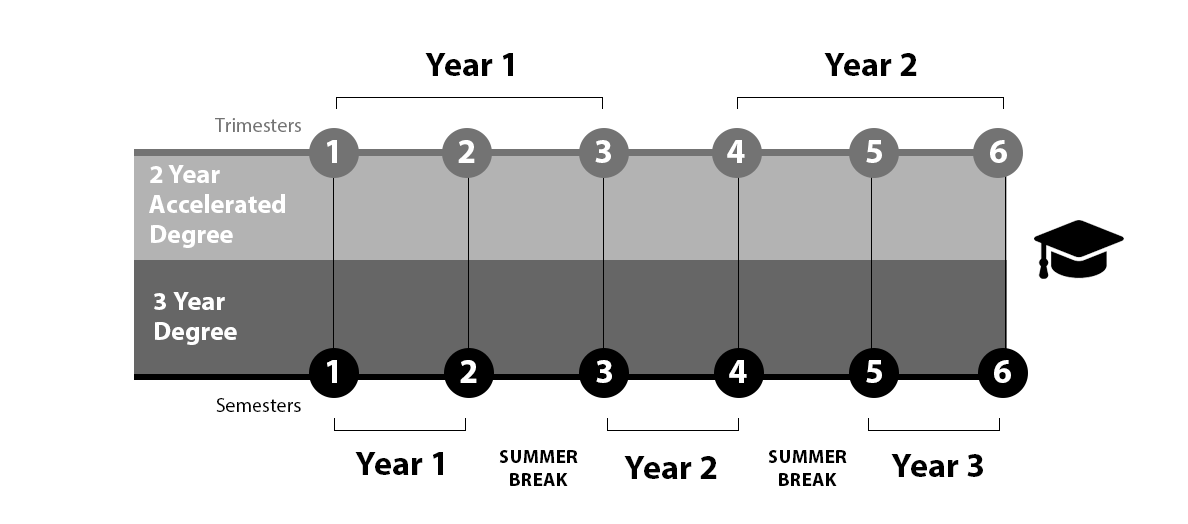
Available in an accelerated 2-year format across all our campuses, so you can embark on your exciting new career sooner, or as a more traditional 3-year programme, you can choose the course schedule that suits you best.
The interdisciplinary nature of our animation and visual effects course encourages collaboration across film, gaming and audio projects, offering a rich and multidimensional learning experience. SAE’s signature collaborative approach is designed to enrich your understanding of the industry and help you cultivate the skills needed to work across different creative mediums.
As you work towards your streamlined degree in animation and visual effects, you’ll gain skills and experience relevant to a range of career opportunities. Whether you’re looking to become a character animator, concept artist, illustrator, motion designer or anything in between, your career will have the best start at SAE.
As an SAE student you’ll have access to our team of Experts who will offer support during your animation degree and guide you towards a fulfilling career in the industry. Our practical approach to learning will see you graduate with a brilliant portfolio, highly relevant work experience and an invaluable network of fellow creatives.
Find Out More About Our VFX & Animation Degree
Course FAQS
What is the Visual Effects & Animation degree at SAE?
A practical degree that teaches you the full VFX production pipeline, 3D modelling, animation, simulation and compositing for film, TV, games and real-time media.
Is this different from Game Art & Animation?
Yes, although related. Visual Effects & Animation focuses more on animation, simulation, VFX workflows and real-world production techniques.
Is the course creative or technical?
Both, you develop artistic creativity and technical mastery of industry tools and workflows.
How is the course taught?
Through practical project work, industry-standard software training, crits and portfolio building. View modules
Which study routes are available?
- Two year accelerated degree, UCAS code 615W
- Three year standard degree, UCAS code VE30
- Year 1
Foundations in 3D modelling, animation, compositing, VFX principles, dynamics and real-time workflows. - Year 2
Advanced simulations, lighting, rendering, procedural effects, environment creation and a Final Major Project.
This route is intense and fast-paced, ideal if you want to graduate and start your career sooner.
What projects will I work on?
Character animation, environment simulation, particle and dynamics effects, compositing sequences, lighting projects and professional-ready final work.
- Year 1
Creative foundations in animation, 3D, motion principles and basic effects. - Year 2
Intermediate techniques in simulation, compositing, lighting and rendering workflows. - Year 3
Advanced VFX, pipeline integration, large-scale projects and a Final Major Project for professional portfolios.
This route allows more time to deepen your skills and experiment with specialisms. View full module details
What projects will I work on?
Character animation, environment simulation, particle and dynamics effects, compositing sequences, lighting projects and professional-ready final work.
What facilities do students use?
High-spec computer labs, VFX software suites, rendering clusters and access to Film, Games and Animation facilities.
Do I need my own computer?
No, campus provides all necessary hardware, though many students choose to use personal laptops for extra practice.
What software do students use?
Maya, Houdini, Substance tools, Nuke, After Effects, Unreal Engine, motion and simulation suites.
Do students get exclusive deals?
Yes, SAE students receive exclusive software licences and industry deals, giving access to professional tools at reduced or free student rat
Students receive academic mentoring, wellbeing services, mental health support and career guidance throughout their time on the course.
Domestic Students
- Level 3 qualification or equivalent
- GCSE English at A* to C, or 9 to 4, or equivalent
- Personal statement
- No portfolio required
Non-standard entry may include:
- A creative portfolio
- An academic essay
- Relevant experience
International Students
Entry requirements vary by country and include English language proficiency where applicable.
To view our full entry requirements, please click here.
Is Student Finance available?
Yes, for both the two year and three year degrees.
How are fees paid?
Through Student Finance, direct payment or approved funding routes.
Are scholarships available?
Yes. Scholarships and bursaries may be available, and the best way to access these is to apply for the course first. Even after you apply, you can still apply for scholarships.
Are there extra costs?
Optional costs may include personal equipment, storage and travel for industry events.
Graduates work in roles such as: 3D Modeller, Animator, Compositor, FX Artist, Lighting Artist, Matchmove Artist, Texture Artist, Simulation Specialist and Pipeline TD.
Skills also transfer into film, television, advertising, VR/AR, simulation, architectural visualisation and motion graphics.
- Go to the UCAS website
- Search for Visual Effects & Animation at SAE
- Use 615W for the two year accelerated degree
- Use VE30 for the three year standard degree
- Upload your qualifications and personal statement
- Submit your application
- Receive your offer
- Accept your place through UCAS
(Institution code: S05 applies for all SAE courses.)
- Go to the SAE application form:
https://www.sae.edu/gbr/form/application-form/ - Complete the online application form and submit your details.
- Once your application is received, a member of the SAE admissions team will contact you to discuss your application and next steps.
- If your application is successful, you will be offered a place on the course.
- Accept your offer and complete enrolment, with the SAE team supporting you throughout the process and staying in contact with you right up until your start date.
- Start your course and begin learning, collaborating and taking the next step in your Visual Effects and Animation career.
Top tip: For peace of mind, applying directly to SAE is often faster than applying through UCAS and is ideal for international or late applicants.
What your course structure will look like
The BA (Hons) VFX & Animation degree degree can be taken as an accelerated 2-year degree, split over 6 trimesters, or a traditional 3-year degree, split over 6 semesters. Its structure follows 3 distinct stages – each designed to help you develop specific skills. Dividing it this way ensures you graduate as a well-rounded VFX Artist/Animator with a universal understanding of the design and development process.Stage 1 (T1/S1 and T2/S2) provides a foundation of core technical knowledge.
Stage 2 (T3/S3 and T4/S4) broadens your skills, exploring new areas of VFX.
Stage 3 (T5/S5 and T6/S6) is all-encompassing, covering every aspect of the VFX production process from conception to completion, including managerial aspects like project management, finance and promotion.
Topics include:
- VFX industry/pipeline overview
- Working with references and concepts
- Understanding file formats (pixel / vector / lossless etc.)
- Aesthetics in cinema
- Film analysis
- Live shot visual properties
- Digital image editing
- Layer-based compositing
- Time management
Topics include:
- Principles of 3D
- Low-poly modelling
- High-poly modelling
- Topology
- UV mapping
- Texturing basics and shading
- Rendering workflows
- Presentation techniques
- Subdivision surface modelling
- Physically based rendering (PBR)
Topics include:
- Lighting setups for live action
- 3D lighting basics
- 3D camera techniques
- Advanced texturing and shading
- Linear workflow
- Rendering
- Compositing for 3D (node-based)
- Project management
- Copyright
Topics include:
- Vector graphics
- Principles of animation
- Storyboarding/animatic
- 2D animation (thumbnailing)
- Rigging
- 3D animation
- Layer-based compositing (packaging)
- Academic writing (using a standard referencing system)
- Research
Topics may include:
- Animation
- Simulation and physics
- Fluid animation
- Look development
- Shading and rendering for FX
- Compositing for FX
Topics may include:
- Modelling for VFX
- Lighting
- Shading
- Rendering
- Compositing
- Colour Correction and grading
- Matchmoving
Topics may include:
- Critical evaluation
- Problem solving
- Autonomous learning
- Industry-ready production techniques
- Modelling
- Prop Art
- Technical art
- FX art
- Animation
- Rendering
- Compositing
Topics may include:
- Modelling
- Prop art
- Technical art
- FX art
- Animation
- Rendering
- Compositing
Any questions?
For any questions regarding our courses or if you’d like more information on how to apply for our Visual Effects & Animation degree at SAE, please contact our Enquiries Team on 03330 112 315 or email ukenquiries@ad-education.ac.uk.