






Insight
Szymon Stawicki: Bridging the Gap Between Students and the Games Industry
#SAEStories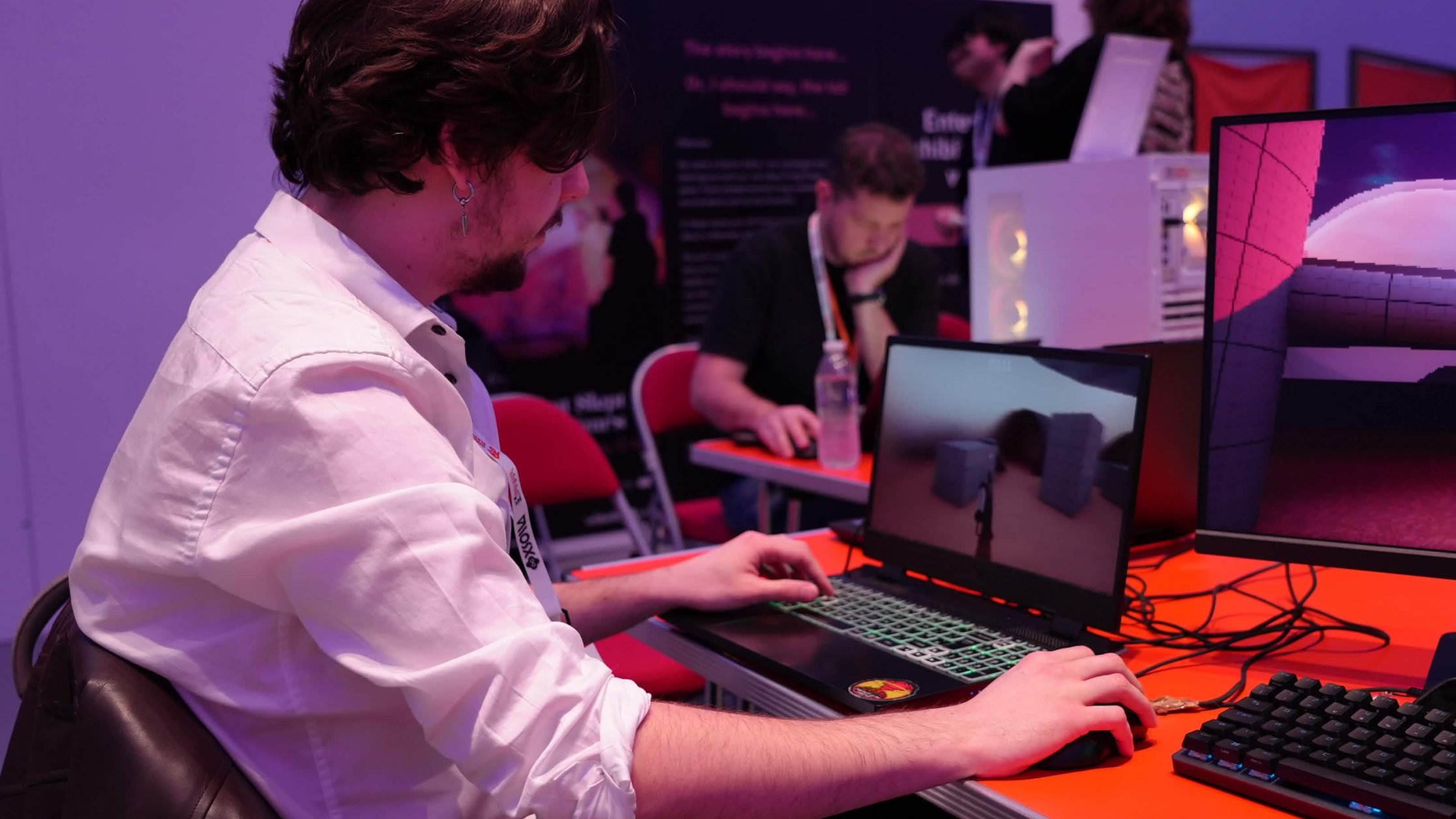
Getting into the games industry isn’t just about what you learn in the classroom. It’s about what you build, who you meet, and how you apply your skills in real-world environments.
For Szymon Stawicki, Games Design Lecturer at SAE, that balance between teaching and industry is exactly where the value lies. Alongside his role at SAE, he is actively working as a game designer and producer with Hardly Hyperbolic, the studio behind the project showcased at the Dark and Doomy event.
From classroom to showcase
The game featured at Dark and Doomy didn’t start as a major production. In fact, it began as a short, two-week side project developed by the team at Hardly Hyperbolic.
“We just wanted to have a bit of fun with it,” Stawicki explains. “We took a break from a main project, made something quickly, and then shelved it.”
But when the opportunity came to submit the game to Dark and Doomy, everything changed. Out of a competitive pool of entries, the project was selected as one of a limited number of games to be showcased.
“It was a surprise, but a very pleasant one,” he says.
Learning from industry legends
The showcase itself was led by John Romero, one of the most influential figures in video game history and a key creator behind Doom.
For students and lecturers alike, this kind of exposure is invaluable.
“He’s one of the biggest figureheads in the industry,” Stawicki explains. “Doom was a cultural phenomenon, and he helped bring that counterculture into the mainstream.”
Why industry connection matters
One of the biggest advantages of studying at SAE is how closely education is tied to industry.
Through events like Dark and Doomy, Game Republic showcases, and other industry meetups, students are exposed to the professional world early in their journey.
“They’re getting entry-level experience already,” Stawicki says. “They’re playtesting, understanding design mechanics, and making connections.”
This kind of exposure goes beyond theory. It allows students to:
- Test their work in real environments
- Receive feedback from experienced developers
- Build confidence presenting their ideas
- Start forming industry connections early
In a competitive sector like games, those experiences can make a significant difference.
Standing out in a changing industry
The games industry, like many creative sectors, is evolving rapidly. With new technologies and increasing competition, breaking in can be challenging.
“It’s beyond critical that students work as well as study,” Stawicki explains.
While tools and knowledge are more accessible than ever, what sets students apart is their ability to apply those skills in real situations.
That means:
- Building projects outside of coursework
- Collaborating with others
- Attending events and networking
- Gaining hands-on experience wherever possible
At SAE, the goal is to create an environment where students can do all of this alongside their studies.
What comes next
Following the success of the showcase, the Dark and Doomy project is now set for release, with plans to launch at a future industry event.
For Stawicki, the focus isn’t on chasing scale or becoming the next big name.
“We just want people to have a great time playing what we make,” he says.
That mindset reflects both his personal approach and the ethos of Hardly Hyperbolic, where creativity and player experience come first.
A community built around creativity
At the heart of it all is the community.
From lecturers actively working in industry to students collaborating across disciplines, SAE is designed to mirror the real creative world.
“I’m really proud of our students,” Stawicki says. “Everyone is working hard to provide for them and help them succeed.”
That combination of education, industry access and community support is what helps students move from learning to doing, and from doing to building a career.
Start Your Game Design Career at SAE
If you’re serious about breaking into the games industry, it’s not just about what you learn. It’s about what you create, who you meet, and how early you start gaining experience.
At SAE, students don’t just study games. They build them, showcase them, and connect with the people shaping the industry.