










Insight
Joe Dolman – Music Business
#NextGenCreatives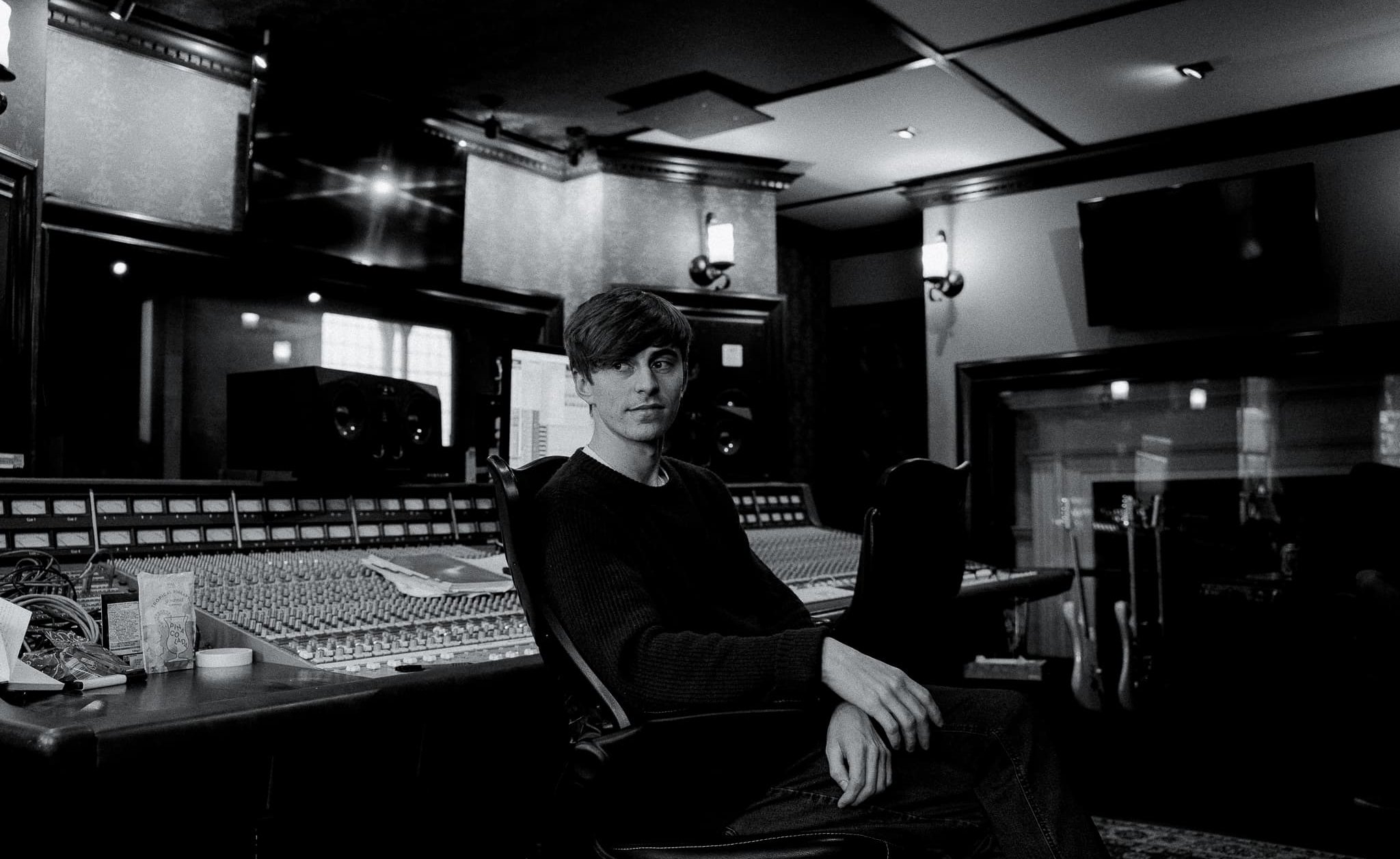
The Music Industry and How to Build Your Own Path
Joe Dolman describes his career as a “double life”. On one side, he is a musician, touring the world, writing, producing and performing. On the other, he is an artist manager and booking agent, negotiating deals, building careers and shaping the business behind the music
“I think I’m the living, breathing definition of a portfolio career,” he says.
At 29, Dolman has already toured across China, America and Europe as a session musician, played everything from pub open mics to Wembley Stadium, and worked across multiple sides of the industry. Today, he manages artists under the company Revolve Music, while also booking tours for singer-songwriters across the UK, Europe and the United States.
It is a career built without a safety net, and without a Plan B.
From the stage to the business side
Dolman’s path into the industry started as a musician.
“I came into music as a player,” he explains. “Guitar, piano, singing, writing, producing. I was always involved in making music first.”
Touring as a session musician led to musical directing, then into tour and production management. Gradually, he found himself stepping into the organisational side of the industry, the work that happens behind the stage lights.
“Before I knew it, I was way too responsible for two books full at once,” he laughs. “But it led me to the other half of my double life.”
Today, that second half includes managing established acts, developing emerging artists and working as a booking agent. It is a career built from overlapping skills rather than a single, linear job title.
The part of the industry people forget
For many young musicians, the business side of the industry can feel distant or even unnecessary. Dolman sees it differently.
“Having an understanding of the music business is crucial,” he says. “It became my Bible. It helped me understand how things actually work.”
After leaving college, he was determined to make music his career. He worked retail and pub jobs while building enough creative work to pay the bills. But to grow beyond that, he realised he needed to understand the system behind the scenes.
“I had to learn how the industry works and how to engage with it,” he says. “How to get it to serve what I was trying to do.”
He is quick to challenge the myth that there are no jobs in music.
“There are definitely jobs,” he says. “And they’re well-paid jobs if you’re good at something useful. But a lot of it is freelance. That’s the path I chose.”
In fact, freelance success often leads to the opposite problem.
“You get headhunted all the time,” he says. “Labels and management companies ask you to come work for them. But I like building my own thing.”
Why studying the industry still matters
Dolman studied music and music business, and he sees that foundation as essential.
“I get asked about this a lot,” he says. “And I always recommend studying it if you can.”
For him, the value was not just in the coursework, but in the people delivering it.
“Most tutors in creative education have actually worked in the industry,” he says. “They can give real, tangible advice. The courses teach you how things work, and then you apply that knowledge to the parts you’re passionate about.”
Rather than acting as a shortcut, he describes education as a launchpad.
“It gives you the foundations. Then you build your own path from there.”
An industry that never stands still
Dolman has watched the music industry change constantly, from MySpace to streaming to social media and now AI.
“There’s always been a new thing,” he says. “People said video killed the radio star. Then it was MySpace, then Facebook, then Instagram, then TikTok. Now it’s AI.”
He does not see artificial intelligence as a threat.
“I don’t really worry about it taking jobs,” he says. “AI is there to assist creative people. I use it on both sides of my work.”
For him, the key is not resisting change, but learning how to work with it.
“It’s about adapting,” he says. “And education is where you can learn that, surrounded by people who are engaging with these changes all the time.”
Curiosity as a career strategy
When Dolman recently spoke to students at SAE’s Royal Leamington Spa campus, his main message was simple.
“Be curious,” he says. “Ask questions about the things you’re interested in.”
He is living proof, he believes, that curiosity can take you further than background or connections.
“I came from a state school, state college. No one around me worked in music. Now I’ve got a solid career in the industry I’m passionate about. That came from being curious and following my interests.”
For students worried about obstacles, his advice is equally direct.
“Nobody knows your vision better than you,” he says. “If you’ve got an idea, go and find out how to make it happen. Take advice, do the research, understand the landscape.”
It may sound simple, he admits, but it works.
“If you hold on to that dream, it will take you where you want to go.”
A bigger industry than people realise
One of the biggest misconceptions Dolman encounters is the idea that music is not a viable career.
“I can’t even fathom that,” he says. “I haven’t had a job for eleven years because I’ve worked full time in music the whole time.”
He points to the scale of the industry, from global touring to festivals, publishing, recording and broadcast.
“Look at something like Glastonbury,” he says. “It’s a three-day event, but it has a full-time payroll in the millions. And that’s just one festival.”
Even during the pandemic, when live events stopped, the industry found new ways to operate.
“Everyone turned to music, films and podcasts,” he says. “Anyone who could record or create content was employed.”
For Dolman, the conclusion is simple.
“There’s so much opportunity. And the most important thing is, I’m not special. I just learned some things, applied them and kept evolving.”
A life built around music
Dolman does not pretend the path is easy. The industry changes constantly, and every role has its own challenges. But for those willing to adapt, learn and stay curious, he sees a future full of possibility.
“I’m constantly learning, constantly evolving, constantly looking ahead,” he says. “It’s an amazing way to live your life.”
Study Music Business at SAE
If Joe Dolman’s journey has sparked your interest in building a career in the music industry, SAE’s Music Business course offers a structured, hands-on route into artist management, marketing, live events and more. From understanding how the industry works to developing real-world skills, students gain the knowledge needed to build sustainable careers in music.