










Insight
Chris Hendrick: From Ghost Tour to Record Deal
#SAEStories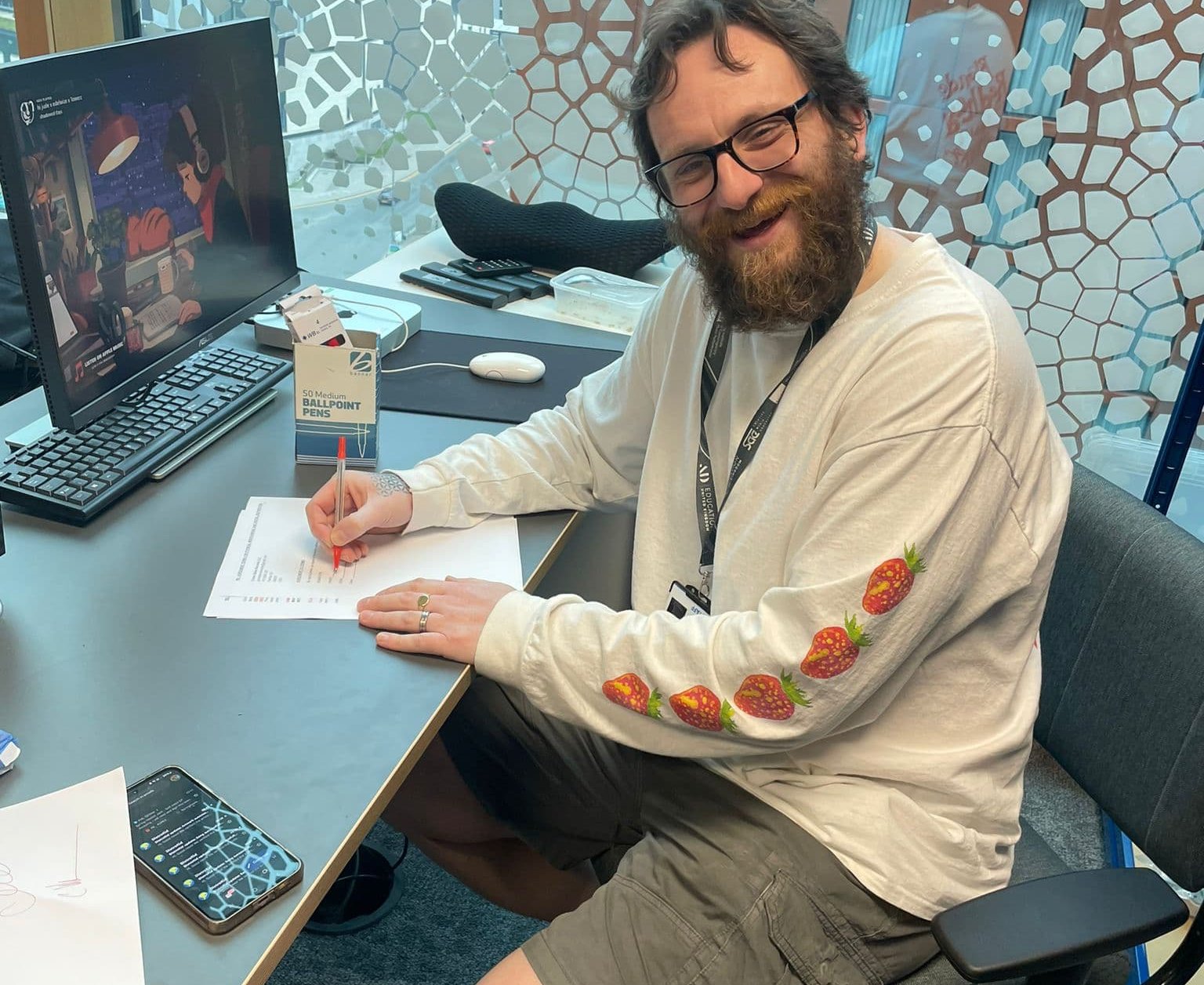
An interview with Chris Hendrick on raw black metal, breaking the rules and the record deal that came in three weeks.
Chris Hendrick did not plan his record deal. It began with a family trip to York, a ghost tour, and a piano riff written by his nine-year-old son.
Within three weeks, he had finished an entire EP under the moniker Spring Heel Jack. A few days later, he woke up to a contract from a label he had followed for years.
“It was a whirlwind,” he says. “The EP started on the 29th of December and I had the contract by the 26th of January.”
For Chris, an SAE graduate and staff member, the journey to that moment was not about chasing trends or polishing every detail. It was about making something raw, authentic and true to the sound he loved.
A project inspired by ghosts and old England
The label, California based Grimestone Records, had long been on Chris’s radar. He had followed every release for 5 years, but one project from the labels roster was particularly interesting to Chris, a project named Old Nick (of which the Grimestone Records owner is a member).
Chris was drawn to Old Nick’s fascination with medieval themes, dark folklore and haunted old England history.
While celebrating his 40th birthday in York, one of the most haunted cities in the UK, the setting began to mirror the lyrical worlds of the band he admired.
“We did a ghost tour, and I realised I was basically living the themes of many of Old Nick’s lyrics,” he says.
Back home, inspiration struck again. His young son played a short piano riff, built around an unusual rhythm. Hendrick immediately heard something else inside it.
“I thought that would make a really cool black metal guitar riff.”
From that moment, the project took shape quickly. Lyrics and vocal structures were adapted from poems of local dark folklore and victorian horror written by lifelong friend Michael John Gilchrist, and within three weeks, the entire EP was written and produced.
Getting the label’s attention
During the making of the EP, Chris quickly realised it would sit perfectly amongst the Grimestone records roster.
There was just one problem. The label was not accepting submissions.
Instead of sending demos into the void, Chris tried something different. He posted about the artwork and logo for the project, explaining how it was taken from a Victorian-era serial comic about a supernatural entity called Spring-heeled Jack, and used the Grimestone records hashtag in the comments of the post.
The post showed both the original 1859 comic illustration and the logo version designed with help from friend and fellow SAE campus technician, Ste Bell, who also designed the EP art.
By chance, the label owner saw it.
“He just commented with fire emojis,” Hendrick laughs. “So I replied saying I’d love to send him the EP and shortly after received the labels email address in my DM’s.”
He asked for a week. Then he worked relentlessly to finish the release. When he woke up the following Monday, the contract was waiting.
Built at home, finished at SAE
Most of the EP was created at home, with programmed drums, synths and bass, and guitars recorded in Chris’s own space. But the final pieces came together with help from the SAE community.
He recorded vocals in the studios at Georgia House, with engineering support from friends and colleagues Savio Issac and James Webb.
“It was really collaborative,” he says. “Being able to use the facilities and work with people here made a huge difference. I even got our Music Business Lectures to look over the contract for me!”
For something as intense as black metal vocals, the studios were essential.
“I can’t really scream at home,” he says, smiling. “I’ve got neighbours.”
Learning the rules, then breaking them
Hendrick first came to SAE as an audio student. At the time, he had been recording music for years, but much of it was instinctive rather than technical.
“I was kind of winging it. I didn’t fully understand the core concepts of what I was trying to achieve.”
At SAE, he rebuilt that knowledge from the ground up. The biggest shift came through mixing and mastering.
“I barely knew what mixing was before I started, never mind mastering. Now freelance recording, mixing and mastering is a significant source of my income.”
That training led to an unexpected challenge on this EP. The style of black metal he was making was intentionally raw and abrasive. It was meant to sound rough, not polished.
“As a professional mixing and mastering engineer, I’m usually trying to make things sound slick and polished. But with this, I had to reverse that thinking.”
Instead of refining every element, he focused on authenticity.
“It needed to sound raw and unpolished. If it was too clean, it wouldn’t have the right feel.”
It was, in his words, a kind of anti-mixing.
“My knowledge of the rules meant I could break them properly.”
Make what you actually care about
For students hoping to land a record deal, Hendrick’s advice is simple.
“Be totally authentic in your creative expression.”
He sees many students chasing the perfect sound or the latest trends, hoping it will lead to industry recognition. But he believes that approach often backfires.
“You can’t just make something because it’s popular and hope you’ll get signed. You’ve got to make what you genuinely feel inspired to make.”
If the work is authentic, the audience tends to follow.
“Make what comes naturally to you. Think about the results after you’ve finished the music, not before.”
For Hendrick, that mindset led to a record deal born from a ghost tour, a piano riff and three weeks of focused creativity.
Not a strategy. Not a trend. Just a sound that felt right.
INSPIRED BY CHRIS? Study Audio Production at SAE
If Chris Hendrick’s journey from student to signed artist has sparked your interest in creating and producing your own music, SAE’s Audio Production course offers a structured, hands-on route into the industry.
From learning recording, mixing and mastering in professional studios to developing your own creative projects, students gain the technical skills and creative confidence needed for today’s music careers.