



TWO-YEAR ACCELERATED DEGREE:
£11,750 per year
THREE-YEAR DEGREE:
£9,790 per year
The annual tuition fee is fully funded via Student Finance England for eligible home-fee students.
TWO-YEAR ACCELERATED DEGREE:
£9,000 per year
You may also be eligible for a bursary or discount, please enquire with our friendly Admissions Team.
THREE-YEAR DEGREE:
£7,500 per year
You may also be eligible for a bursary or discount, please enquire with our friendly Admissions Team.
TWO-YEAR ACCELERATED DEGREE:
£11,750 per year
THREE-YEAR DEGREE:
£9,790 per year
The annual tuition fee is fully funded via Student Finance England for eligible home-fee students.
TWO-YEAR ACCELERATED DEGREE:
£11,750 per year
THREE-YEAR DEGREE:
£9,790 per year
Scholarship available:
Yes – click here to apply
The annual tuition fee is fully funded via Student Finance England for eligible home-fee students.
TWO-YEAR ACCELERATED DEGREE:
£11,750 per year
THREE-YEAR DEGREE:
£9,790 per year
The annual tuition fee is fully funded via Student Finance England for eligible home-fee students.
TWO-YEAR ACCELERATED DEGREE:
International students (non-EU/EEA/Swiss)*: £17,000 per year
EU/EEA/Swiss students*: £11,440 per year
THREE-YEAR DEGREE:
International students (non-EU/EEA/Swiss)*: £16,250 per year
EU/EEA/Swiss students*: £9,535 per year
*Student visa required
TWO-YEAR ACCELERATED DEGREE:
International students (non-EU/EEA/Swiss)*: £17,000 per year
EU/EEA/Swiss students*: £11,440 per year
THREE-YEAR DEGREE:
International students (non-EU/EEA/Swiss)*: £16,250 per year
EU/EEA/Swiss students*: £9,535 per year
*Student visa required
TWO-YEAR ACCELERATED DEGREE:
International students (non-EU/EEA/Swiss)*: £17,000 per year
EU/EEA/Swiss students*: £11,440 per year
THREE-YEAR DEGREE:
International students (non-EU/EEA/Swiss)*: £16,250 per year
EU/EEA/Swiss students*: £9,535 per year
*Student visa required
TWO-YEAR ACCELERATED DEGREE:
International students (non-EU/EEA/Swiss)*: £17,000 per year
EU/EEA/Swiss students*: £11,440 per year
THREE-YEAR DEGREE:
International students (non-EU/EEA/Swiss)*: £16,250 per year
EU/EEA/Swiss students*: £9,535 per year
*Student visa required
TWO-YEAR ACCELERATED DEGREE:
International students (non-EU/EEA/Swiss)*: £17,000 per year
EU/EEA/Swiss students*: £11,440 per year
THREE-YEAR DEGREE:
International students (non-EU/EEA/Swiss)*: £16,250 per year
EU/EEA/Swiss students*: £9,535 per year
*Student visa required
September 2026
September 2026
September 2026
September 2026
Offers will be made to applicants who are expected to meet, or exceed the entry requirements below, in addition to supplying a personal statement:
SAE Institute will accept non-standard entry applications, which do not meet the 72 UCAS points or equivalent, and/or maths/English at level 2 or equivalent as required:
Students whose first language is not English will need a qualification that demonstrates competence in English, equivalent to UK GCSE (Level 2) grade 4 (c) or above.
Equivalent qualifications can be accepted, where these qualifications have been verified by ENIC and are adopted widely within the UK Higher Education sector, including:
- International ESOL C1 Expert – pass in all four components
- International ESOL SELT B2 (Listening, Reading, Writing, Speaking) – minimum 33 in all components
- ESOL Integrated Skills in English II – pass in all components
*Accepted on exceptional basis for the applicants whose local test centres are affected by closures due to Covid-19
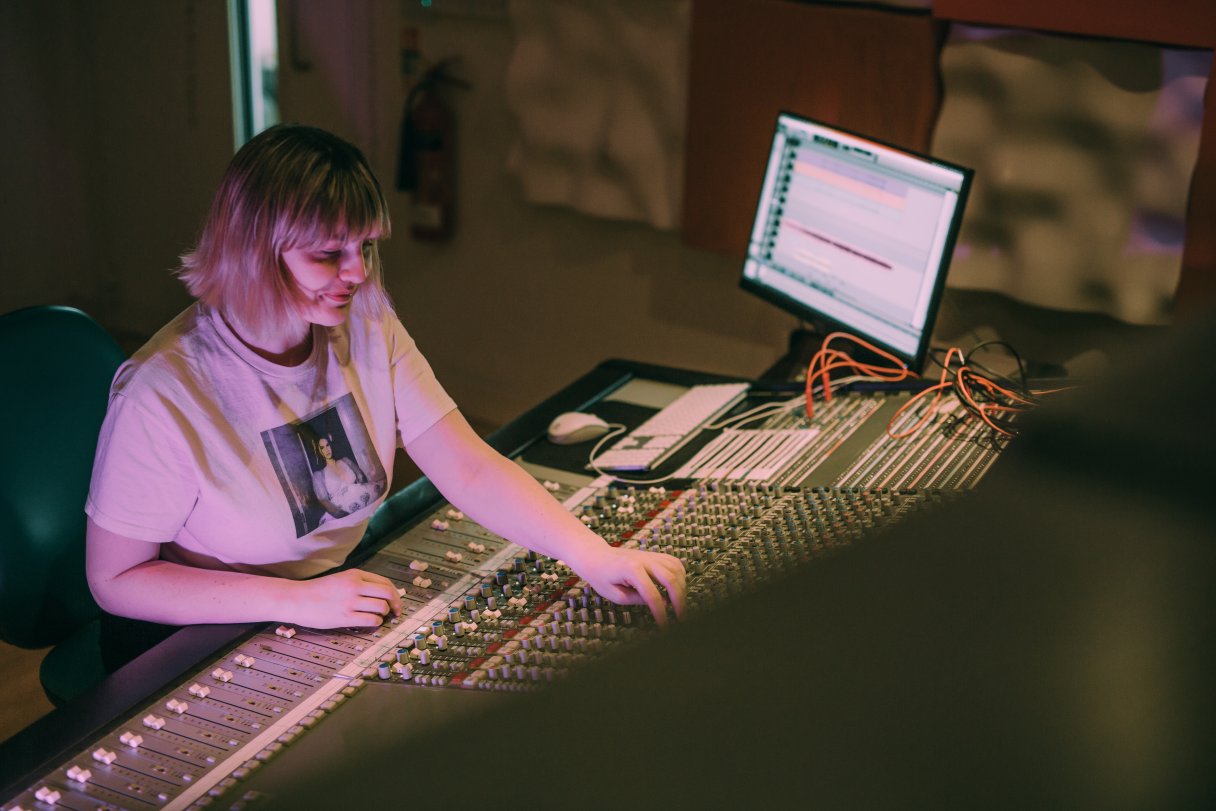
WHY CHOOSE THIS COURSE?
- Learn how audio tools, effects and plug-ins work at a deep technical level
- Develop advanced digital signal processing and C++ programming skills
- Build plug-ins, audio tools and interactive systems from scratch
- Work with visual programming, embedded systems and professional coding environments
- Train using industry standard tools including Max MSP, Pure Data and Pro Tools
- Learn how to design, test and deliver software used by producers, engineers and game developers
- Work on projects connected to real audio companies including Solid State Logic
- Graduate with a portfolio of working prototypes and audio software
- Enter one of the most in-demand technical fields in the creative industries
WHAT YOU WILL LEARN?
- C++ programming
- Visual programming with Pure Data and Max MSP
- Digital signal processing for audio
- Plug-in development for professional DAWs
- Software design, debugging and testing
- Synthesis, sampling and digital audio manipulation
- Creative coding and interactive systems
- Embedded systems combining hardware and software
- Real time audio processing
- AI assisted development tools
- Working with JetBrains CLion, Rider and professional IDEs
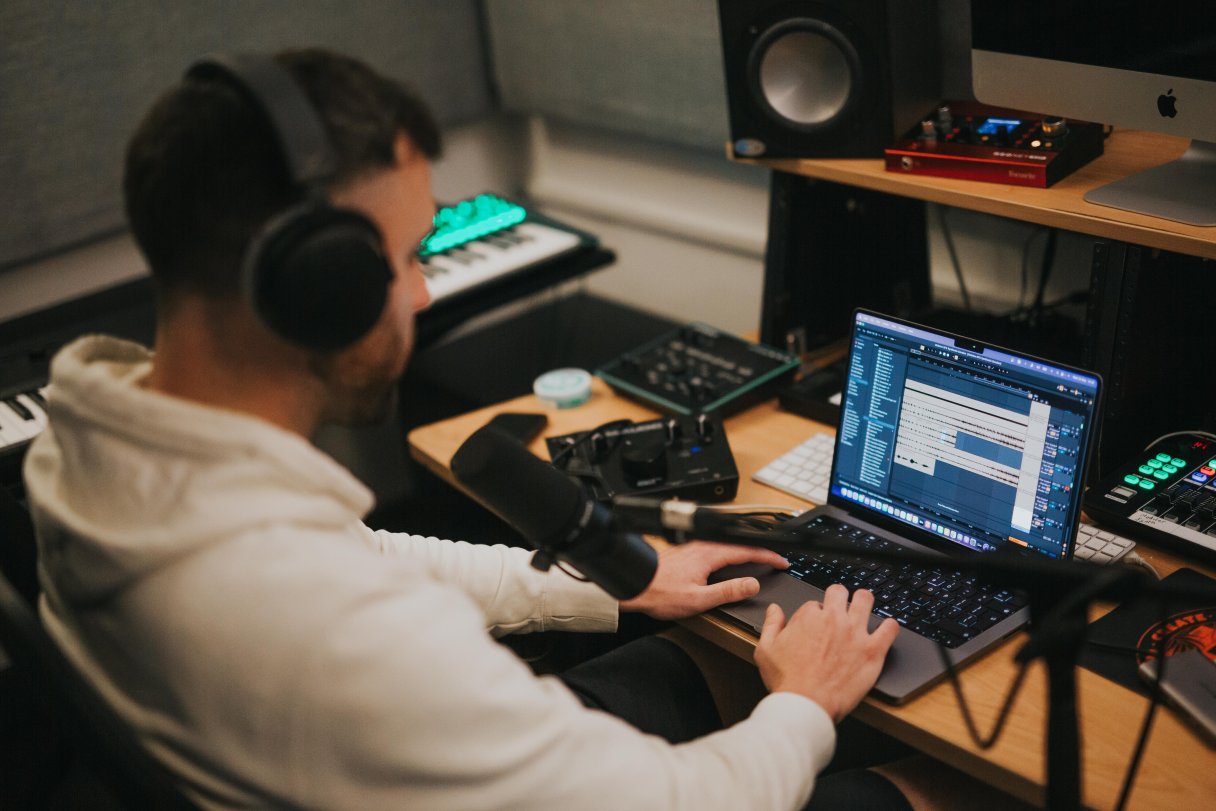
YOUR AUDIO SOFTWARE ENGINEERING JOURNEY BEGINS TODAY
WHAT YOU CAN EXPECT FROM YOUR AUDIO SOFTWARE ENGINEERING DEGREE?
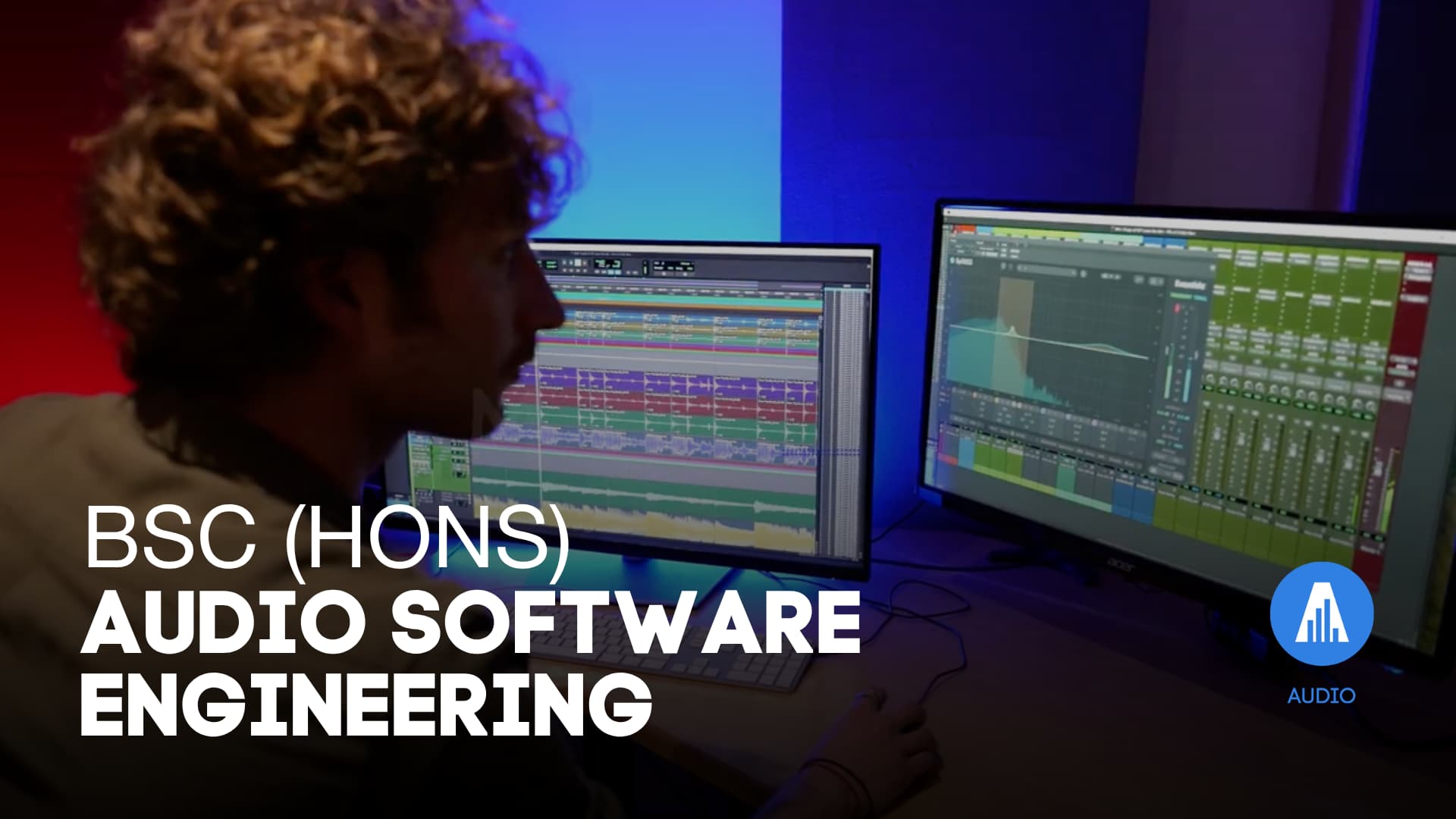
SAE’s BSc Hons Audio Software Engineering is for students who want to build the technology behind modern audio production. This degree merges sound engineering with software development, empowering you to create the plug-ins, effects, DSP tools and interactive systems used in music, film, TV and games.
You will learn by doing, working on real projects from your first trimester. The course moves from visual programming tools into fully coded plug-ins, embedded systems and advanced digital signal processing.
You will collaborate with industry partners such as Solid State Logic and take part in project-driven briefs that mirror real commercial environments.
This degree is perfect for students who are curious, inventive and technically minded. If you love audio and technology, and want to build the tools everyone else uses, this is the course for you.
You will graduate with rare skills, strong industry knowledge and a portfolio that shows employers exactly what you can do.
START MY AUDIO SOFTWARE ENGINEERING JOURNEY TODAY
Course FAQS
What is the Audio Software Engineering degree at SAE?
A hands-on technical degree that teaches you to build, develop and engineer software tools for audio, interactive systems, digital instruments and creative technology.
Is this course creative or technical?
Primarily technical, but also creative. You design and build real audio tools, plug-ins, systems and applications that solve real problems.
Do I need experience with coding?
No, you do not need advanced programming skills to start. The course builds your skills step by step from fundamentals to advanced.
How is the course taught?
Through project-based learning, studio labs, code reviews, practical software development and real testing workflows.
Which study routes are available?
- Two year accelerated degree, UCAS code AS2Y
- Three year standard degree, UCAS code AS3Y
You select your preferred duration at application stage.
- Year 1
Foundational programming, development principles, C++, digital audio basics, object-oriented design and introductory tool building. - Year 2
Advanced DSP, audio plug-in development, performance optimisation, frameworks like JUCE, testing and a Final Major Project.
This route is intensive and ideal for students who want to graduate early with a strong technical portfolio.
- Year 1
Core computing foundations, introductory programming, audio systems logic, syntax and workflows. - Year 2
Intermediate software development, real-time audio processing, development frameworks and collaborative tool building. - Year 3
Advanced audio tool development, research integrations, interaction design, optimisation and a Final Major Project.
This route allows more time for experimentation, deeper understanding and expanded portfolio development.
-
- Graduate a full year earlier
- Save £7,000 in tuition fees
- Enter the audio industry sooner
- Maintain momentum across three trimesters per year
- Build a professional portfolio in less time
This route suits students ready for intensive, practical study and early career progression.
- Study at a more measured pace
- More time for creative experimentation
- Learn through multiple projects across studios
- Build confidence in both technical and creative workflows
This route suits students who want depth and flexibility in their production learning.
What facilities do students use?
Computer labs with high-spec systems for audio compile, testing and simulation, dedicated software development environments and real audio hardware interfaces.
Do I need my own computer?
Not required. Campus facilities provide everything needed, though many students bring laptops for personal development.
What software do students use?
C++, JUCE framework, DAW real-time audio environments, IDEs like Visual Studio, version control systems, testing tools and digital audio libraries.
Will I have access to DAW software outside of campus?
Yes. You can access DAW software for free on campus. When working off campus, you’ll also be able to take advantage of student discounts to purchase or subscribe to DAW software for personal use.
Do students get access to exclusive software deals?
Yes, SAE students benefit from exclusive educational licences and industry software deals, giving access to professional tools at heavily reduced or free student rates.
Academic mentoring, coding workshops, wellbeing support, mental health resources and careers guidance are available throughout your studies.
Domestic Students
- Level 3 qualification or equivalent
- GCSE English and Mathematics at grades A to C, or 9 to 4, or equivalent
- Personal statement
- No portfolio required
Non-standard entry may include:
- A technical or creative portfolio
- An academic essay
- Relevant experience in computing or audio
International Students
Entry requirements vary by country and include English language proficiency where applicable.
To view our full entry requirements, please click here.
Is Student Finance available?
Yes, for both the two year and three year degrees.
How are fees paid?
Through Student Finance, direct payment or approved funding routes.
Are scholarships available?
Yes. Scholarships and bursaries may be available, and the best way to access these is to apply for the course first. Even after you apply, you can still apply for scholarships.
Are there extra costs?
Optional costs may include personal equipment, external storage, software bundles or event travel.
Graduates progress into roles such as: Audio Software Developer, DSP Engineer, Plug-in Developer, Audio Systems Programmer, Interactive Media Developer, Technical Audio Designer, Software Tools Specialist and Creative Technologist.
Skills also apply to games, media, broadcast, music technology and digital product development.
- Visit the UCAS website
- Search for Audio Software Engineering at SAE
- Enter UCAS code AS2Y for the two year accelerated degree
- Enter UCAS code AS3Y for the three year standard degree
- Upload your qualifications and personal statement
- Submit the application
- Receive your offer
- Accept your place through UCAS
(Institution code: S05 applies for all SAE courses.)
- Go to the SAE application form:
https://www.sae.edu/gbr/form/application-form/ - Complete the online application form and submit your details.
- Once your application is received, a member of the SAE admissions team will contact you to discuss your application and next steps.
- If your application is successful, you will be offered a place on the course.
- Accept your offer and complete enrolment, with the SAE team supporting you throughout the process and staying in contact with you right up until your start date.
- Start your course and begin learning, collaborating and taking the next step in your Audio Software Engineering career.
Top tip: For peace of mind, applying directly to SAE is often faster than applying through UCAS and is ideal for international or late applicants.
What your course structure will look like
Topics include:
· Sound theory
· Decibels and signal flow
· Acoustics and psychoacoustics
· Electronics and audio systems
· Microphones and loudspeakers
· Digital Audio Workstations (DAWs)
· Audio signal routing
· Equalisation, effects and dynamics
Topics include:
· Setting up development environments (IDEs)
· Variables and data types
· Functions, classes and objects
· Pointers and memory concepts
· Structs, enums and casting
· Console application development
You’ll also explore graphical programming environments and experiment with prototyping digital audio tools and instruments.
Topics include:
· Synthesis and sampling
· Sound design techniques
· Critical listening
· Graphical programming (Max/MSP, Pure Data)
· Audio prototyping
You’ll develop your own audio effects and software plugins, gaining hands-on experience with industry-standard tools and frameworks.
Topics include:
· Developing audio effects
· Creating processing plugins
· Digital signal processing fundamentals
· JUCE framework
· Testing, evaluation and iteration of audio processing tools
You’ll explore audio implementation, programming and sound design while working with students from other creative disciplines.
Topics may include:
· Sound design and editing
· Foley recording
· Audio tool development
· Immersive audio
· Game audio implementation and programming
Topics may include:
· Advanced audio tools and techniques
· Version control and collaboration
· Software deployment
· Performance analysis
· Business planning
· Marketing and audience analysis
Topics may include:
· Audio software development
· Game audio programming
· Immersive audio systems
· AI
· Audio networking
· Embedded systems
· Industry workflows
You’ll create a project proposal and build a deeper understanding of your chosen specialism, supporting progression into industry or postgraduate study.
This self-directed project will form a key part of your portfolio, helping you take the next step into the industry.
Any questions?
For any questions regarding our courses or if you’d like more information on how to apply for our Audio Software Engineering degree at SAE, please contact our Enquiries Team on 03330 112 315 or email ukenquiries@ad-education.ac.uk.