


Research Projects
Boost your experience
Research & Development Department
The Research & Development Department at SAE Institute Milan is responsible for promoting and directly overseeing projects that engage with at least one of the following areas:
-
Applied research in the video, audio, or game sectors
-
The promotion of production activities in the three areas mentioned above
-
The strengthening of connections with creative industries, at both national and international levels
All permanent and non-permanent faculty of the Academy are part of this department. Projects can arise from internal proposals or external stimuli (stakeholders, companies, other entities, etc.).
In project activities, we aim to involve students or Alumni who have expressed interest wherever possible, so that the experience can translate into an opportunity for professional growth.
To contact the scientific committee, you can send an email to cts.milano@sae.edu.
Scientific Committee
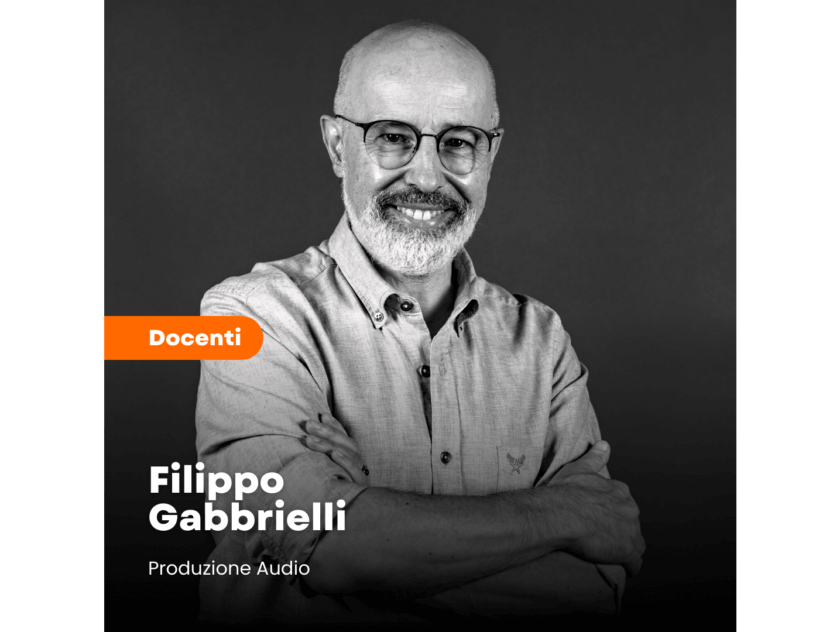
The department is coordinated by the Scientific Committee, currently composed of three internal faculty members with expertise in each of the three areas mentioned above.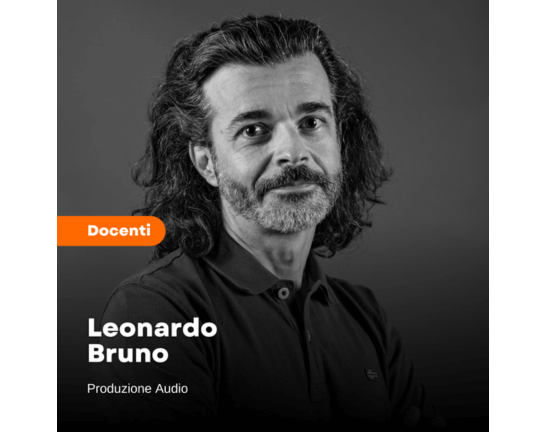

PROJECTS
Italy has always been recognized worldwide for its manufacturing and design capability, which masterfully combines high technology and high craftsmanship.
The New Intelligence of Made in Italy project revolves around three cornerstones: craftsmanship, artificial intelligence, and social and ethical innovation linked to the world of arts and applied arts.
For calls for applications and related documents, go to the Transparent Administration page.

The New Intelligence of Made in Italy project (INTAFAM_00025) C.U.P. H37G24000080001 is funded by the PNRR, charged to the directorial decree 124/2023 of the Ministry of University and Research.
P+ARTS promotes excellence in artistic research in Italy by supporting young talent through an innovative ecosystem focused on ecological transition and digital transformation. This interdisciplinary project integrates art, technology, and sustainability, involving prestigious AFAM (Higher Artistic, Musical and Choreutic Education) institutions and public universities.
Within the P+ARTS project, SAE Institute proposes a research and development project that will serve as an operational training ground and, at the same time, the background for reflection on higher education, specifically in the field of game studies. More specifically, the project consists of the following steps:
- DESK PHASE: A preliminary phase of reconnaissance and mapping of secondary and tertiary educational offerings in Italy and abroad in Europe, with a specific focus on game studies. In this phase, dialogues with industry associations will be established to identify the main Italian and foreign (European) players for building partnerships for IT and creative development and the design of “applied” games:
- FIELD PHASE: The second, more operational phase involves the research and development of an Applied game with psycho-educational purposes, for screening and rehabilitation regarding specific learning disorders. More specifically, a feasibility study will be conducted, and work will be done on the partial realization of a game framework. This phase will constitute an active and participatory moment of teaching for students in game-related programs. This will be followed by a testing phase and a final one for assessing the experience through a survey of the perception of the stakeholders involved – monitoring the impact on teaching – and analysis of expectations for future developments.
Visit the page dedicated to P+ARTS
For calls for applications and related documents, go to the Transparent Administration page.
SAE Institute is a partner of the research project Musical Metaverse: an inclusive Extended Reality platform for networked musical interactions funded by PRIN funds, made available by the Ministry of University and Research.
The lead institution for the call is the University of Trento, led by Prof. Turchet, scientific director of the CIMI-Lab (Creative, Intelligent & Multisensory Interactions Lab), a laboratory dedicated to the study of technological integration in interactive experiences, including artistic and musical ones.
The Polytechnic University of Turin and the Conservatory of L’Aquila are also part of the project.
The general objective of the project is to design an immersive environment in the Metaverse that enables the sharing of musical experiences, whether aimed at learning, practice, or live performance.
Our academy’s contribution concerns the phases of gathering expectations from industry professionals regarding the potential of this environment and testing the successive development versions of the immersive environment.
The research work involves the Technical Scientific Committee of SAE Institute and, on a voluntary basis, the student body, who will be able to experience firsthand unique spaces that represent the future of musical performance.
More details about the project are available here
Women in Music reaches its fourth edition, this time focusing on the relationship between women and money within the music industry.
The research launch round table was attended by industry professionals, academics, and representatives from institutional and associative sectors, such as Nur Al Habash (Italia Music Export), Celeste Costantino (Fondazione Una Nessuna Centomila), Michela Galluccio (Restart), Rossella Lo Faro (FIMI), Giulia Sesini (Università Cattolica del Sacro Cuore), and Isa Maggi (Stati Generali delle Donne). They engaged in a dialogue with the research coordinator and SAE lecturer Alessandra Micalizzi, which serves as the starting point for the new research project #DonneMuDe.
#DonneMuDe aims to explore the perceptions and, above all, the experiences of women working in music who, despite being industry professionals, are excluded from compensation negotiations, often deferring the discussion to the nearest male figure. This work seeks to understand the dynamics of this phenomenon and identify potential concrete actions, support, and training to reverse the trend.
The event marked the first phase of the study promoted by SAE Institute: through dialogue with experts who, either through direct experience or research, are close to the topic, the research tools will be validated and the survey will be launched.
Participate in the survey and fill out the questionnaire!
Visit the official Women in Music page
This essay, published by Write Up Books and sponsored by Women in Games, investigates the gender issue in the Italian cultural industry and collects studies and research that, with different approaches, examine what happens in the three main industries under investigation: music, the audiovisual industry (cinema and TV), and Games.
The publication is available in Open Access at this link.
Visit the official Women in Music page
SAE Institute is the lead academy for the #PLAYSERIOUSLY project, which includes organizing an hackathon to develop a concept for an inclusive and psychoeducational video game.
Abstract
Immersive audio, especially when listened to through headphones, is becoming a new form of consumption, and many artists today are releasing new productions in this format or reissuing old ones. The “We Are Together” project consists of the creation of a musical piece featuring both acoustic and electronic parts. Its uniqueness lies in the fact that there is a video recording of the musicians’ performance in the live room of a recording studio, and the associated audio has been processed in two different ways: one as a conventional stereo mix and the other in binaural format to simulate the listener’s presence in the environment where the musicians are playing. The results are very interesting; we invite you, equipped with headphones or earphones, to experience the difference in the degree of immersion between the two versions. Happy listening!
VIDEO
Comparison Guide
Immersive Audio Mix
Stereo Audio Mix
REPORT
Abstract
Multimedia Installations is a subject included in the Audio Production study program. It is a strictly project-based course where students can broaden the application fields of their skills in audio programming, sound design, and systems design for arts and entertainment, further expanding the possibilities for integration within their creative and professional profiles.
Objectives – Educational Challenges
The course’s challenge is to have students acquire knowledge regarding the integration of specialized technologies from different professional fields into a unified artistic project based on sound and musical content. It also aims to develop skills regarding the implementation of innovative technical solutions for sound and multimedia installations to build complex systems for the transmission and control of digital signals. The “Interactive Programming for Live Performance & Broadcast” area is structured around the setup of a system designed for a professional radio format, complying with EBU R128 standards, which includes live musical performances in the studio and the management of an outside broadcast connection.
Solutions
An AoIP communication system based on the Dante protocol, integrated with QSC, QLab, and Yamaha, was used. To also allow for creative expression and to make the study and practical exercise phase more engaging, the concept of the format was left open to each work team, thus giving every group the opportunity to invent a style and theme for the broadcast.
REPORT
2022 – MULTIMEDIA INSTALLATIONS – FUNKY JUNK
2022 – MULTIMEDIA INSTALLATIONS – QLAB
2022 – MULTIMEDIA INSTALLATIONS – QSC
2022 – MULTIMEDIA INSTALLATIONS – YAMAHA
The pandemic has significantly impacted the creative industry, including the music sector, and this has primarily affected precarious workers and women. Starting from this reflection, which arose during one of the most complex historical junctures of our time, SAE Institute initiated an exploratory study dedicated to gender differences in the music industry, involving women who work in this sector in various capacities. Thanks to the research, it was possible to highlight both cyclical and structural aspects of a gap that still struggles to be bridged today.
REPORT: 2021 – Women in Music Industry Report
Visit the official Women in Music page
Abstract
SAE Institute has collaborated with an international academic network on an experimental study regarding the quality of digital filters in correcting speed and equalization errors when transferring tracks from analog to digital. Specifically, the contribution involved the implementation of the experimental methodological framework, with the involvement of students for testing.
REPORT
In 2021, the second observatory of the video game industry was launched, maintaining the qualitative methodological framework. This time, the research focus was on applied games, meaning games created with purposes related to learning, education, or enhancement. Industry experts were involved in order to reconstruct the limitations and opportunities—not yet widely exploited—of this sector together.
REPORT
In 2019, the first qualitative observatory on the Italian video game industry was launched, promoted by SAE Institute. Through in-depth interviews with industry figures, it was possible to reconstruct the limitations and potential of the gaming world. The interview also involved exploring the causes and motivations underlying some typical characteristics of the Italian industry.
REPORT
2019 – Video Game Observatory Report
CO-FUNDED PROJECTS
Italy has always been recognized worldwide for its manufacturing and design capability, which masterfully combines high technology and high craftsmanship.
The New Intelligence of Made in Italy project revolves around three cornerstones: craftsmanship, artificial intelligence, and social and ethical innovation linked to the world of arts and applied arts.
Within the P+ARTS project, SAE Institute proposes a research and development project that will serve as an operational training ground and, at the same time, the background for reflection on higher education, specifically in the field of game studies. More specifically, the project consists of the following steps:
- DESK PHASE: A preliminary phase of reconnaissance and mapping of secondary and tertiary educational offerings in Italy and abroad in Europe, with a specific focus on game studies. In this phase, dialogues with industry associations will be established to identify the main Italian and foreign (European) players for building partnerships for IT and creative development and the design of “applied” games:
- FIELD PHASE: The second, more operational phase involves the research and development of an Applied game with psycho-educational purposes, for screening and rehabilitation regarding specific learning disorders. More specifically, a feasibility study will be conducted, and work will be done on the partial realization of a game framework. This phase will constitute an active and participatory moment of teaching for students in game-related programs. This will be followed by a testing phase and a final one for assessing the experience through a survey of the perception of the stakeholders involved – monitoring the impact on teaching – and analysis of expectations for future developments.
SAE Institute is a partner of the research project Musical Metaverse: an inclusive Extended Reality platform for networked musical interactions, funded by PRIN funds made available by the Ministry of University and Research.
The lead institution for the call is the University of Trento, led by Prof. Turchet, scientific director of the CIMI-Lab (Creative, Intelligent & Multisensory Interactions Lab), a laboratory dedicated to the study of technological integration in interactive experiences, including artistic and musical ones.
The Polytechnic University of Turin and the Conservatory of L’Aquila are also part of the project.
The general objective of the project is to design an immersive environment in the Metaverse that enables the sharing of musical experiences, whether aimed at learning, practice, or live performance.
Our academy’s contribution concerns the phases of gathering expectations from industry professionals regarding the potential of this environment and testing the successive development versions of the immersive environment.
The research work involves the Technical Scientific Committee of SAE Institute and, on a voluntary basis, the student body, who will be able to experience firsthand unique spaces that represent the future of musical performance.
More details about the project are available here.