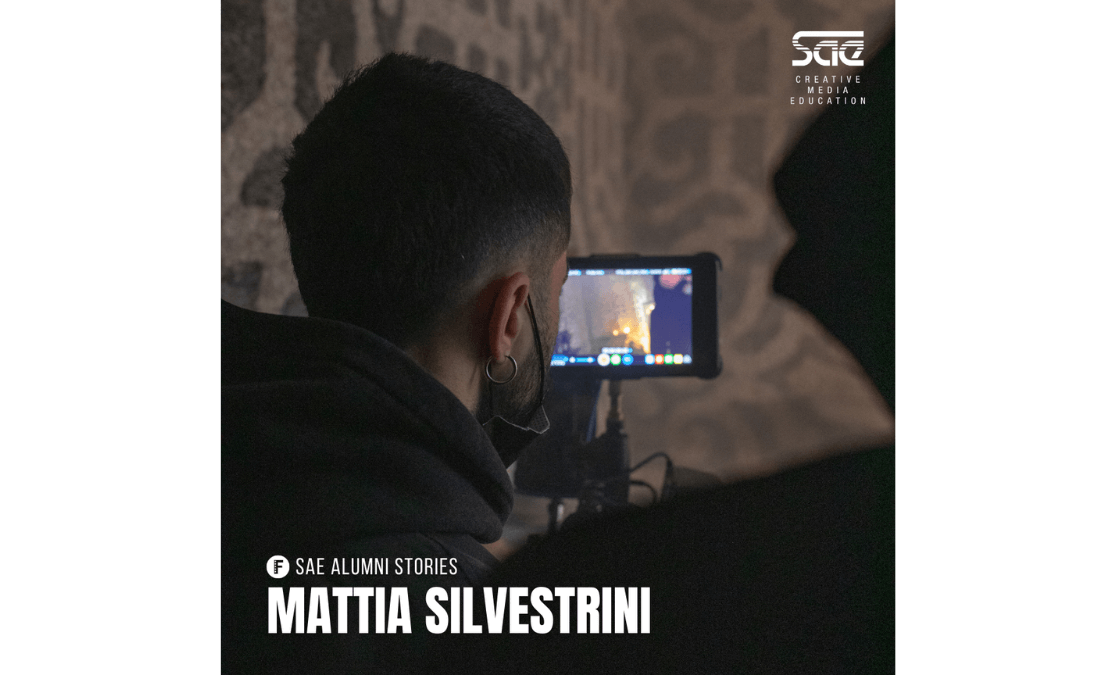
Hi Mattia, welcome back to SAE Institute Milan! How are you? How is this period going?
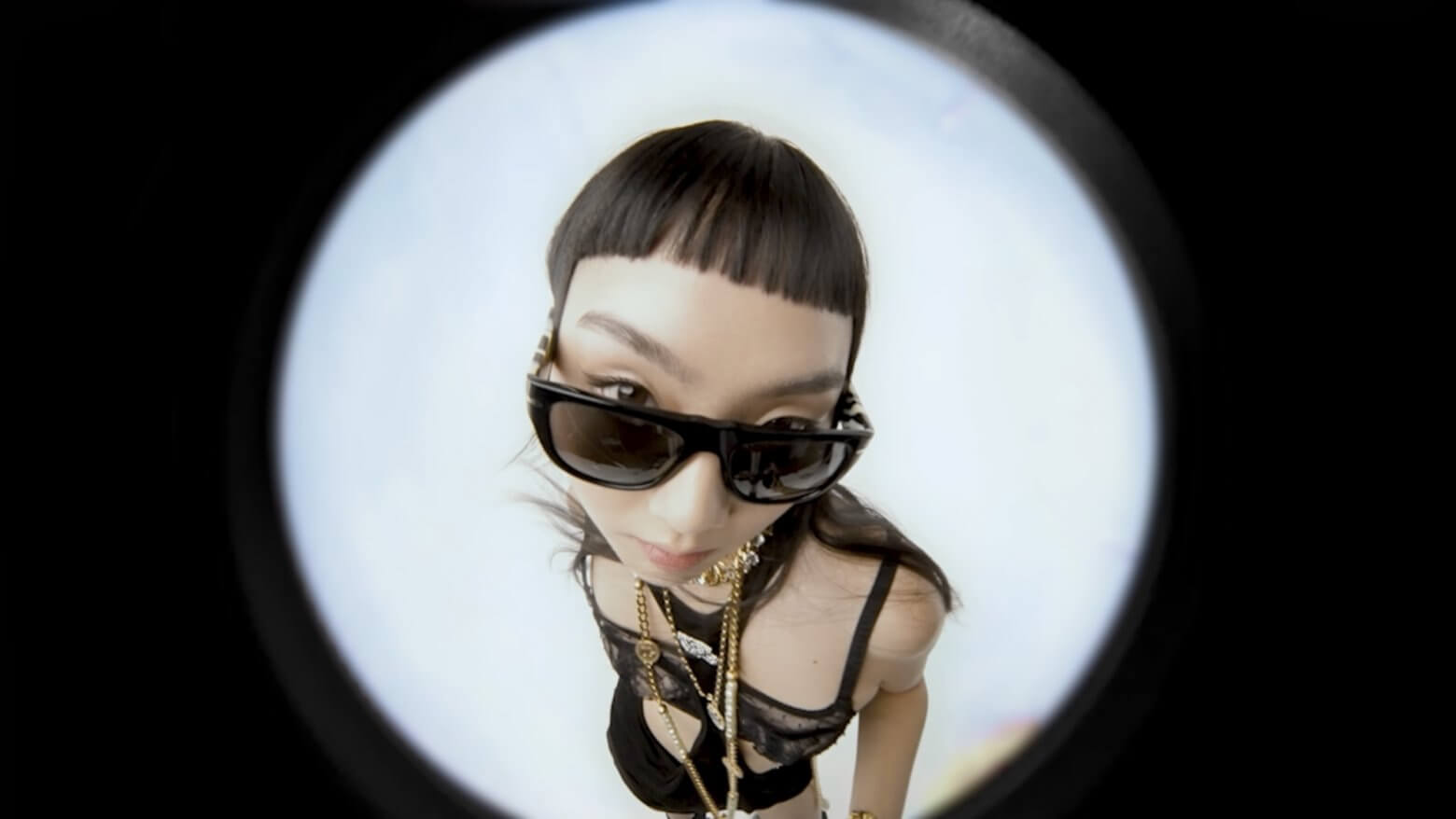
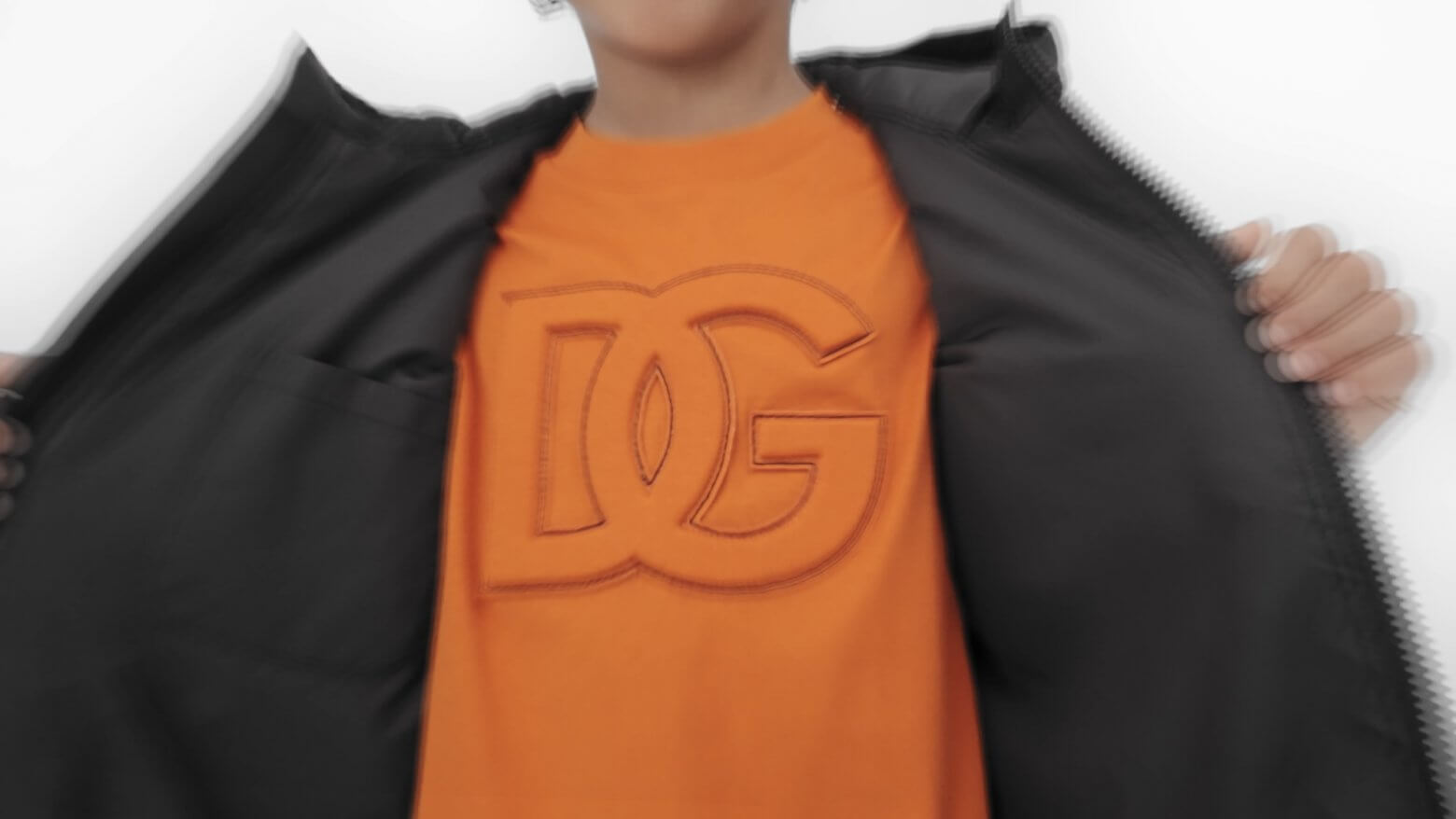
All good! Work-wise things are definitely going well, I’m doing several different things at the same time. As a director, I’m reaching interesting goals in the fashion world, such as the Dolce & Gabbana and Persol campaigns. I’m not only directing, which remains my biggest dream, but I’m also exploring other paths and discovering other professions that are really interesting me. In fact, I’m digital project manager for a new fashion brand, Aurilio. I’m also working with other brands in the field of social content strategy and social content creation. In this case the language changes completely from the traditional approach of a director. There is a director’s approach to creating social content too, but it’s definitely different, because the goal of the content is different from that of a cinematographic product.
How does a director’s approach translate into a field like social media, and what are the differences compared to the more commonly known approach of the film industry?
There are definitely a lot of aspects in common, from pre-production, to writing the video, to its production. From a directorial point of view, what changes is the very objective of the product. A director has to communicate to those who watch the video, they have to convey a certain kind of concept, and this has to be told in the right way through images. There are rules to follow, and if they aren’t respected you risk not getting the message across. In the social media field, however, there are other aspects. The goal of selling, of going viral: these are things that distance you a lot from certain directorial concepts and require a different approach. You don’t necessarily need to use professional cameras, you don’t necessarily need perfect editing. On social media, the goal matters a lot, which is to grab attention and hold on to it.
We’ve already seen from your first stories how many different professional paths you can take. But how did your journey begin? How did you first get into the world of video?
I’ve always been a kid who spent his time in his bedroom on the computer. I didn’t yet know I wanted to make videos, but, I don’t know why, at some point I started downloading goal highlights from my favorite football team and re-editing them. Or I’d go skateboarding, film myself and edit the videos. In high school I had friends who sang and I helped them make their music videos. You could say my path started with music videos, and so did my first professional connections, eventually leading me to work with important artists. When the artists I was working with started collaborating with brands for various commercials or other activities, I also shifted my focus a bit more toward fashion. Over time, it became more of a budget factor because, compared to the music industry, there is definitely more money in fashion in Italy. Major Italian fashion brands are globally renowned: if you shoot a campaign for Dolce & Gabbana, for instance, you are doing it for a worldwide audience, whereas if you make a video for an Italian artist, you are creating it for that specific niche. In fashion, there is also more room for creative expression and greater creative freedom, as opposed to following a musical artist, which instead comes with many more boundaries.
So fashion and music have been the fields you’ve explored the most. Are there other substantial differences between these worlds for a videomaker?
Working with artists in the music field isn’t easy, even though it was a very useful experience because it was like a school for interpreting them. I learned a lot of things, and I really enjoy translating their vision into video language. From the practical standpoint of making a music video, you have to stick to the artist’s brand identity; there’s little of the director’s brand identity, even though you can still bring part of your own style.
What aspects do you focus on most when approaching a new project, whether it’s a fashion brand or an artist? It’s a very important phase of the process where you need to start getting to know a reality and understand it in order to interpret it at its best.
I definitely look at how they present themselves, what they create and how they come across on social media, on their website, what their image is. I inform myself about what they’re presenting at the moment, so what the concept of the collection or the product they need to sell is. I always ask for all the material they have available, from the presentation of the collection itself, for example, to the brand identity. In any case, I really enjoy talking with the team to try to gather as much information as possible. My advice is to do as much as possible what you like and what you’re passionate about, because that’s what you can interpret best.
What is your favorite moment in the entire video production process?
The shooting day is my favorite part. As I was mentioning earlier, I’m passionate about football, I played football as a kid, and I remember very well the anxiety and adrenaline of match day. It’s something I really see again in the pre-production process that leads up to that day, which is planned so you can enjoy it to the fullest. When I’m assigned a job, I take care of the entire project, from direction, to editing, to post-production, except for 3D. For many fashion projects, I work as a duo with another guy who was in my class at SAE, Alexander Coppola, and together we also handle all the post-production, in addition to directing. He, for example, is also very good at color correction. I also really enjoy working on audio. I often go to the studio of a guy who works with us while he’s working on the audio. I frequently actively participate in pre-production, because for some production companies I am a freelance director, but for other jobs the client is mine, so I oversee all the pre-production too, even though sometimes I wish I could focus solely on the creative side.
How important is it to find the right people to collaborate with, and how do you know they are “the right ones”?
Being a freelancer and not working for a specific company, I’ve been able to choose the people I work with, largely because they’re good at their job, but also because we get along well on a human level. I’ve also had bad experiences in this regard, and many of them made me lose the desire to face the work. Many of the people I’ve ended up working with come from SAE Institute. One of the aspects that makes SAE Institute so useful is precisely the fact that it allows you to meet peers who aspire to work in the same field. I am still in touch with some of them, both from my year and from previous years. As we were saying, Alexander and I, who work as a directing duo, also met at SAE Institute and built a wonderful relationship. I am very happy because, even on working days, I get to share the work with people I get along with in every respect, and with whom I share a friendship. I really enjoy working with friends, even though it can sometimes be complicated and not always easy. Many of my collaborations with fashion brands came about through mutual acquaintances, not from a contact on LinkedIn.
What skill did you find most useful to have when you started working on your first projects as a professional?
Personally, it has been useful for me to have a broad knowledge of all sectors within the video ecosystem. Pre-production, post-production, content strategy, creating an editorial plan, or knowing how to communicate with agencies or press offices, organizing an event. I have learned that when you are an active part of a team for a project, whether you are creating a venue, a bar, a bakery, or a fashion brand, there are certain aspects that you find everywhere. Therefore, being well-rounded is important, also because a director has to communicate with all departments and oversee all teams during post-production, and in the same way, a project manager must communicate with all departments and keep everything under control. If you find yourself talking to a 3D Artist without actually knowing what they are doing, you end up not understanding, missing steps, and perhaps failing to communicate in the right way.
Quali sono i tuoi prossimi obiettivi a livello professionale?
I would say creating major videos for prominent fashion campaigns. In an interview I did a year ago, I mentioned that one of my goals was to direct a fashion show, and I’ve now done two of them. So, my goals definitely include continuing to direct fashion shows, as well as seeing this project with Aurilio turn into something lasting. It’s already going very well, but I wish I had a crystal ball to know if we’re going about things the right way—though the overall feeling is good.
What would you advise a young SAE student who is approaching this job?
Not to rule out any aspect, to take an interest in all areas of video production, because in the early stages, we don’t really know what we like doing. Then, as I mentioned earlier, it is truly important to cultivate personal and professional relationships both during your school years and afterward. As a result, you quite naturally find yourself working in this field and becoming part of this world, which I can also tell you, in my opinion, is a beautiful world.